
SODA
Alan De Cecco, known under the alias SODA, is a multi-disciplinary artist working across walls, canvas, sculpture, graphics and sound. Emerging from graffiti culture in the early 1990s, his practice has evolved into a distinctive language of abstract geometry, light and shadow.
Working primarily in black and white, SODA constructs compositions that appear to project from the surface. Through precise control of light direction and spatial structure, his shapes create the illusion of a third dimension. Influenced by architecture, minimalism, graphic design and experimental electronic music, his work moves between lettering and pure abstraction, allowing viewers to interpret freely without imposed narrative.
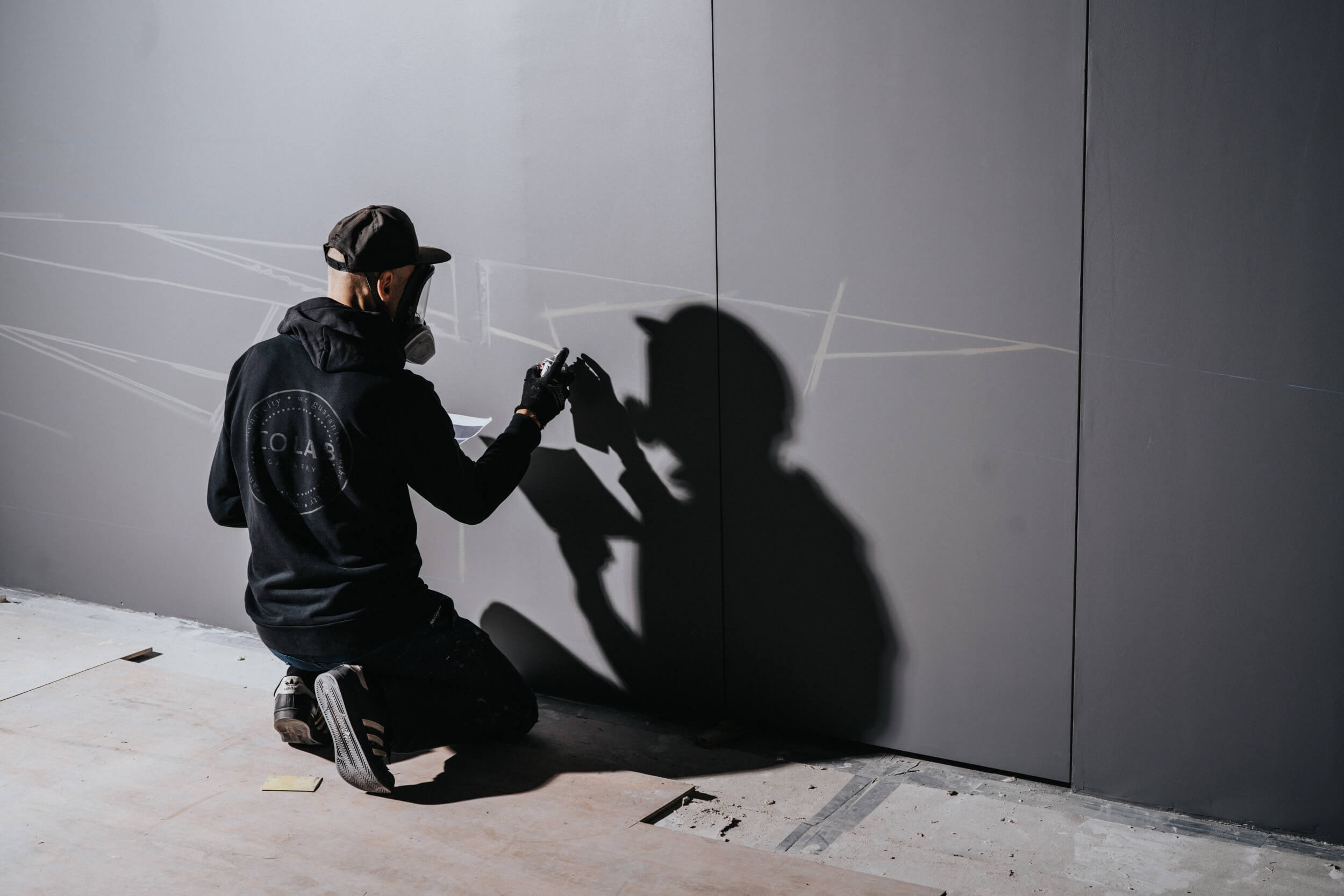
CONVERSATION
Current Work
How would you describe your artistic or curatorial practice in a few words?
I come from graffiti. Graffiti is about writing your own name, and mine is S-O-D-A. That’s where everything started.
But over time it became less about traditional lettering and more about shapes, 3D structures, light and shadow. I remove outlines and colours to focus on form. The letters become abstract, sometimes almost destroyed. They turn into geometry.
It’s very related to architecture and graphic design. I build compositions that look like they are coming off the wall. I study where the sunlight hits the surface and reproduce that same direction in the painting. The illusion is that the shapes are real, but they are only painted.
What themes or ideas are central to your work right now?
Illusion, abstraction, geometry and space.
I don’t try to send messages. I don’t want to explain anything. I just express myself. Everyone sees something different. Some people see space-ships, airplanes, probably because I like to giver it dynamism. That’s fine.
I like abstraction because when you look at a portrait or landscape, you already know what you’re looking at. With abstraction, you are in front of something new. You don’t have references.
Are there any projects or exhibitions you're currently working on that you’re excited about?
I’m always working on new walls, canvases and commissions.
One project that meant a lot to me in the past was building one of my shapes as a real architectural element inside a house. It wasn’t just painted. It became part of the space. It took one year of work with architects and engineers. Because I studied architecture before, applying my art physically into space was important for me.
I would like to continue developing more sculptural and architectural projects.
Anything that inspires you in particular?
Music is very important. I listen mainly to electronic and experimental music, and I also produce music myself.
When I paint, I think about sound. When I make sound, I think about shapes. It’s connected. Every painting feels like one frame of an animation that continues in my mind. The music is the sound of what I paint.
Architecture and graphic design also inspire me. Clean lines. Structure. Precision and most importantly details.
Exploring your visual identity
How would you define your visual or brand identity?
Minimal. My logo is just my signature.
I worked for big graphic design studios around Europe, and I always believed the less graphic there is, the better. The painting itself is the graphic.
Black and white. Monochrome. Clean layout. Nothing unnecessary. In another word: minimalism.
Are there particular values, moods, or stories you aim to convey through how you present your work?
Freedom.
I don’t want business to dictate the art. For me, art shouldn’t even be sold, but we have to live, so it becomes a business. The challenge is keeping control and staying an artist.
The people who contact me already know my work. They don’t ask me to paint something different. That’s important.
How you bring your artistic identity to life
How do you express your identity?
Through the work itself. The website, the layout, everything is very clean and minimal. It should bring you directly to the paintings.
The identity should not compete with the work. It should support it.
Have any of those elements become signature to your practice?
Yes. The monochrome 3D structures with strong light and shadow.
Removing outlines and colour became something very personal. That reduction is part of my identity.
Looking ahead
What’s your next big focus or direction?
I want to push further into sculpture and architecture. Creating shapes that are not only painted illusions but real physical forms.
At the same time, I’m developing the business side more consciously — website, shop, organisation — without losing artistic freedom.
Is there something you’d love to do more of creatively or in how you present your work?
I just want to keep progressing.
When I finish a painting, I already want the next one to be better. I’m never completely satisfied. That’s how you move forward.
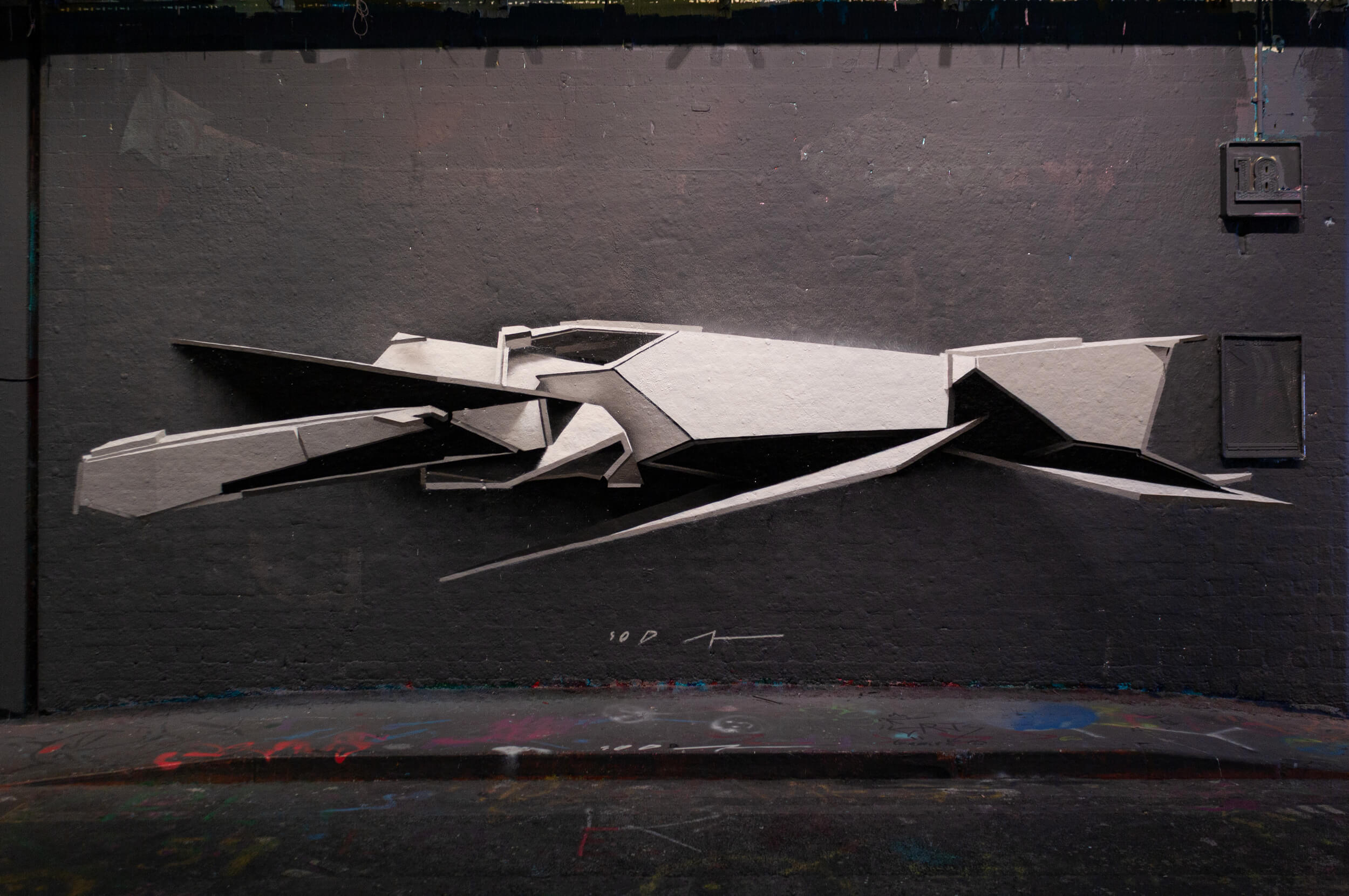
UK - 2026

DE - 2025
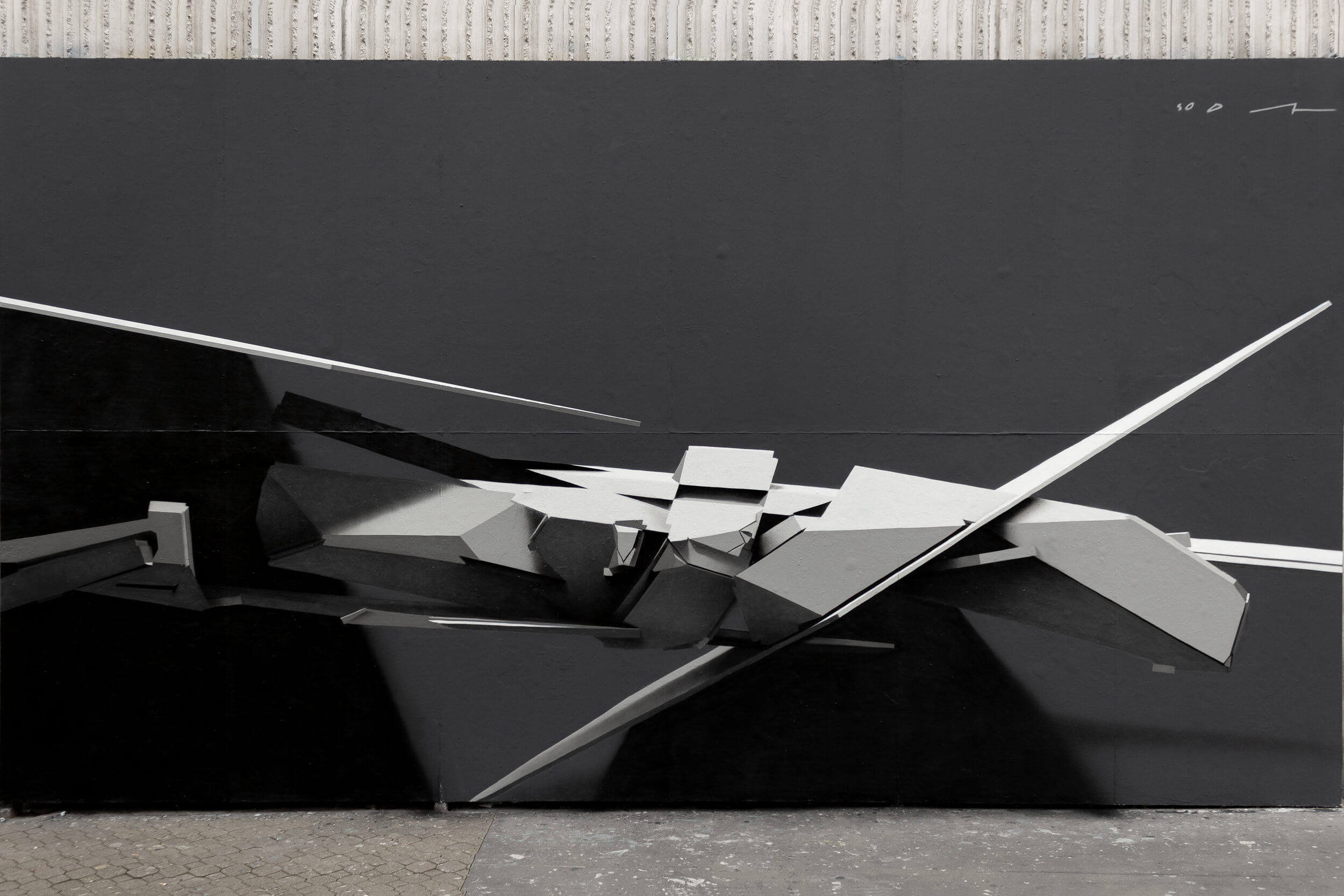
FR - 2025
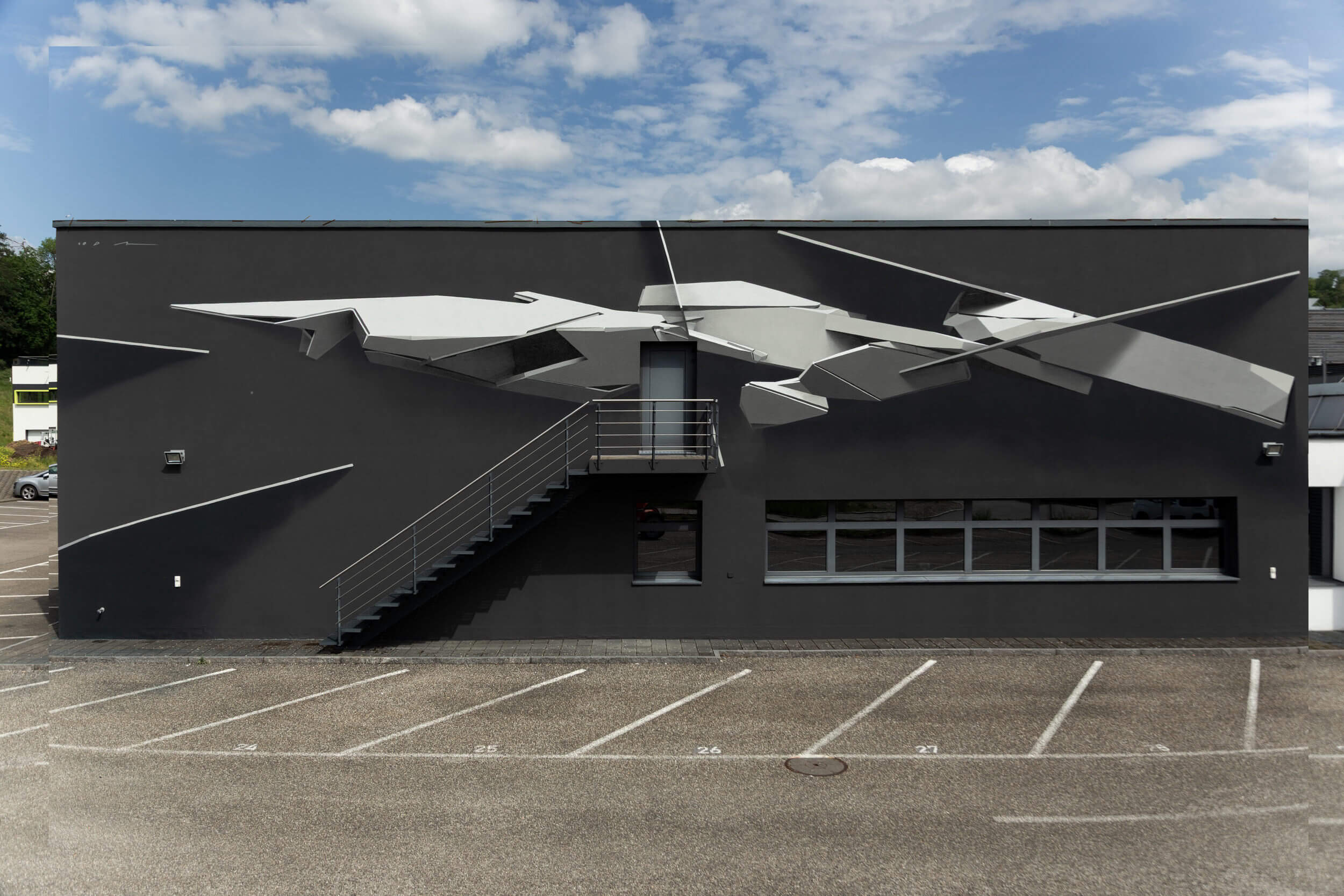
CH - 2025
