
LUCY ALGAR
Lucy Algar is an artist, performance designer, and educator whose practice is rooted in drawing as a way of thinking, making, and collaborating. Moving fluidly between studio practice, participatory workshops, and performance contexts, her work explores movement, spatial awareness, and the relationship between bodies and space.
Drawing sits at the centre of all aspects of her practice. Whether working alone, alongside dancers, or within educational settings, Algar uses drawing as a collaborator and provocateur, a means of revealing ideas rather than fixing them, and a way of building trust and communication within performance-making.
at Russell Maliphant Dance Company
Image by Dana Fouras
December 2025
CONVERSATION
Current Work
How would you describe your artistic practice in a few words?
I describe myself confidently as an artist, performance designer, and educator. Those three areas overlap and inform each other constantly. I have just finished twelve years as Course Leader of BA Theatre Design at Wimbledon College of Arts, UAL. This was an extraordinary role which enabled me to teach both in the UK and internationally. I was very lucky to work with such talented students and brilliant colleagues.
Now I am building a new phase of my career where I move more fluidly between those roles, spending more time in the studio while continuing to teach, facilitate, and collaborate. Allowing these strands of my practice to inform one another feels important at this moment.
What themes or ideas are central to your work right now?
Movement sits at the heart of everything I do, closely followed by spatial awareness. Much of my work involves drawing dancers and working alongside choreographers, both through my own practice and through Drawing Performance Projects.
Drawing is central to how I think and work. It forces a deeper level of engagement than observation alone and brings the body into the design process. As a performance designer, your own body informs your practice, and drawing allows you to access that embodied understanding.
Across my work, similar questions recur: how bodies occupy space, how scale and depth are perceived, and how placing and spacing affect meaning. These concerns run through my studio drawings, my collaborative projects, and the ways I support designers in developing confidence as active participants in performance-making.
What are you currently working on and excited about?
At the moment, I am drawing dancers in rehearsal, developing new Drawing Performance Projects events, and actively seeking opportunities to show my own work more widely.
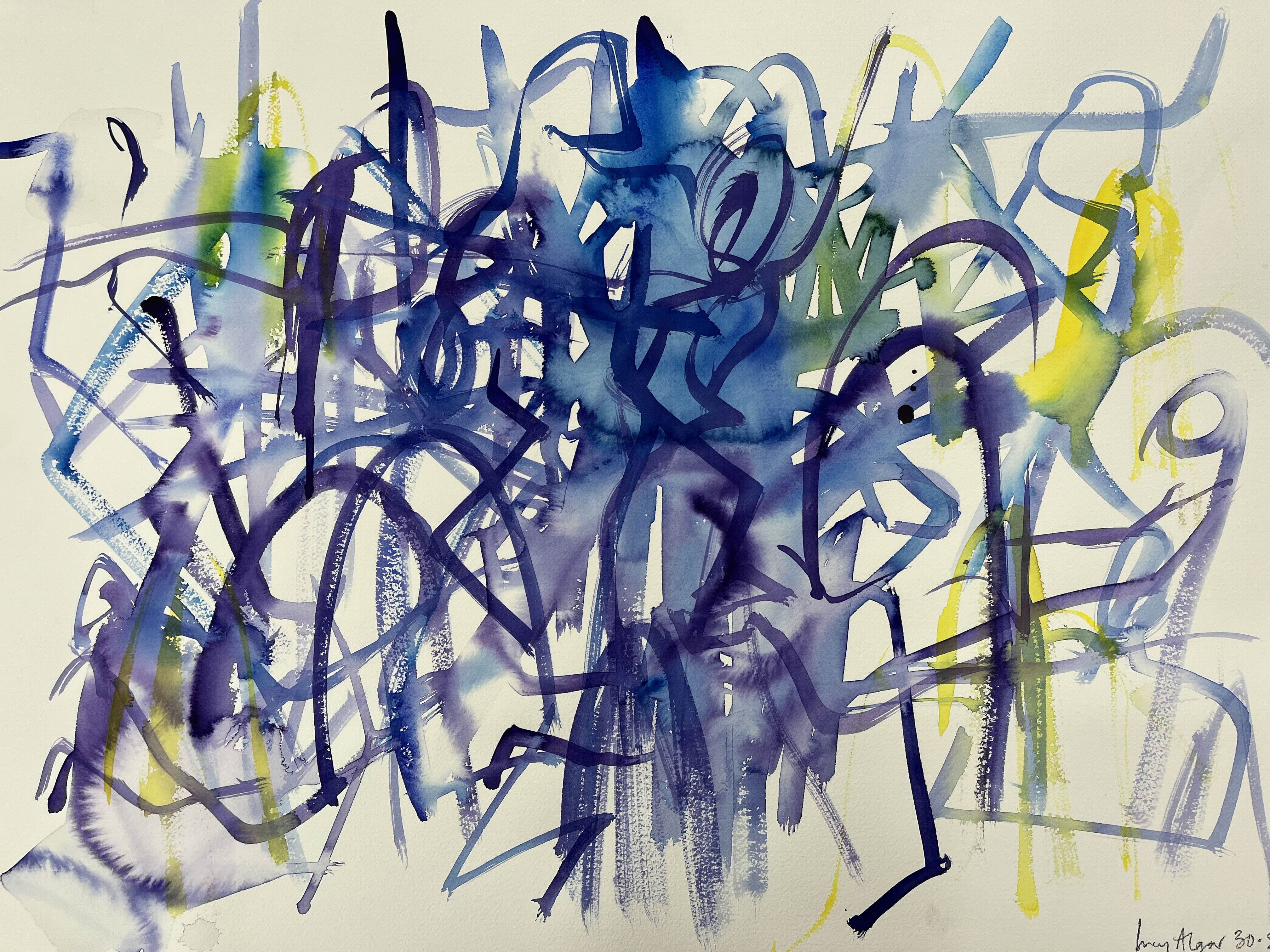
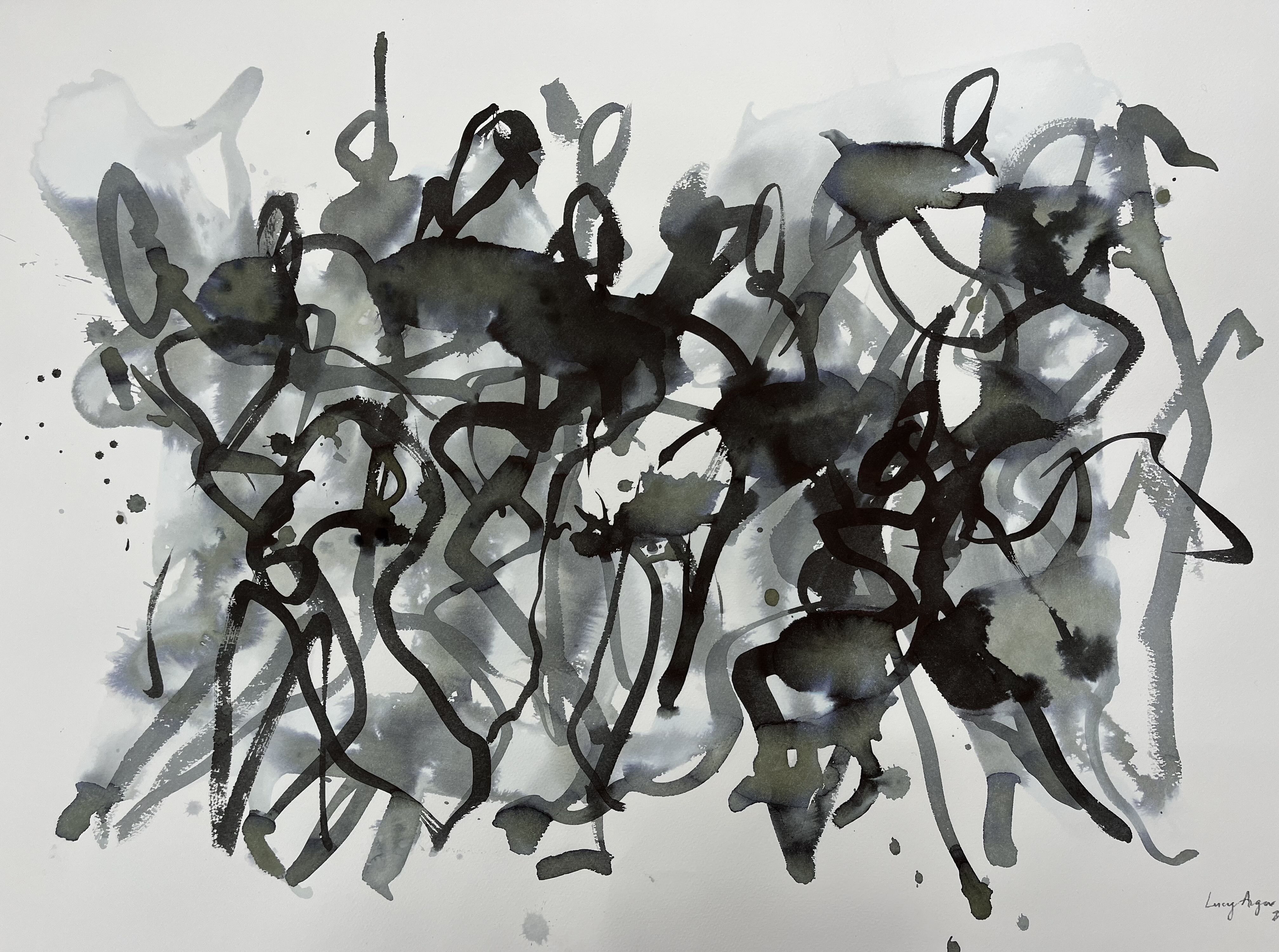
I am particularly interested in exhibiting my drawings of performance. These are not performed drawings, but drawings made in response to performance, capturing energy, movement, and spatial relationships. I am also keen to return to designing for contemporary dance, working closely with choreographers and performers.
This feels like a moment of transition. Having stepped away from full-time institutional teaching, I am open to new collaborations, exhibitions, workshops, and teaching opportunities that allow the different strands of my practice to continue overlapping in meaningful ways.
Anything that inspires you in particular?
Books and references have always been important to me. I am influenced by theatre designers and artists who place drawing at the centre of thinking and making, as well as by ideas around chance, materiality, and the body in space. I am thrilled that one of my drawings has been selected for the 2026 Stanley Nolan prize. He was both an artist and theatre designer.
On a more personal level, my familiarity with the body began early. My mother was a physiotherapist, and talking about bodies, movement, and physical awareness was completely normal growing up. I think that has had a lasting impact on how naturally embodiment and movement sit at the centre of my work.
Exploring your identity
How would you define your visual or brand identity?
My identity is very clearly rooted in drawing. It is about line, responsiveness, and integrity. Every line has to mean something, and I have a strong aversion to gratuitous marks. I am also deeply connected to performance making and design.
When I make durational drawings of dance, I never add anything afterwards. The drawing is complete when the movement ends. What may appear loose or messy is in fact precise and deliberate.
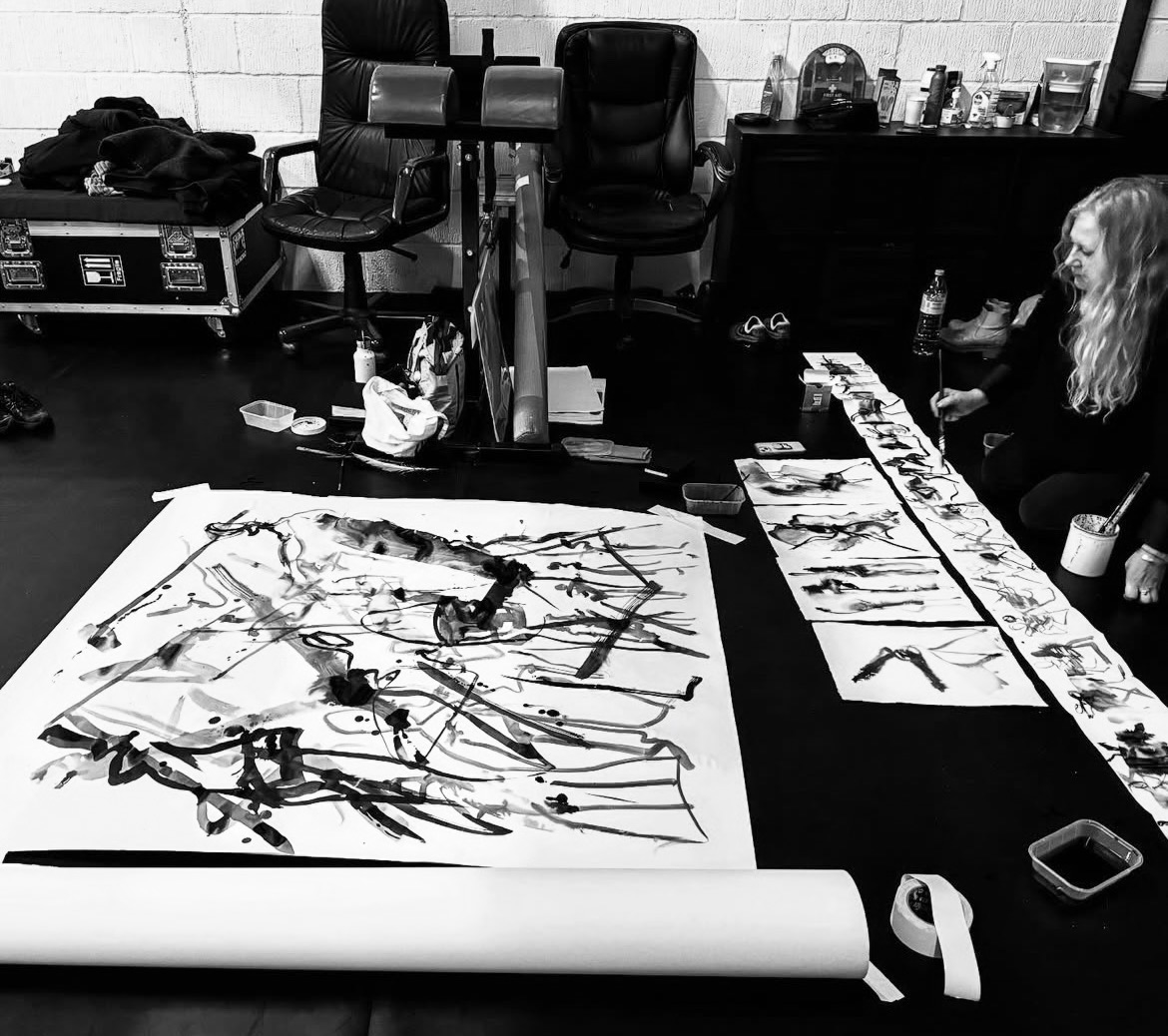
I often work in concertina sketchbooks. They appeal to me because they are not flat. They hold depth, sequence, and narrative, much like a performance. They can be read as having a beginning, middle, and end, and when displayed they remain three-dimensional objects, which connects directly back to my identity as a performance designer.
Are there particular values, moods, or stories you aim to convey through how you present your work?
Trust sits at the centre of my practice. Trust in collaborators, trust in materials, and trust in drawing as a process.
I am interested in patience and in allowing ideas to emerge rather than forcing them into shape. Much of my work is about creating space for vulnerability, particularly within collaborative contexts. Through Drawing Performance Projects, I encourage designers to witness the vulnerability of performers and to recognise their responsibility in creating spaces that performers can inhabit truthfully.
How you bring your artistic identity to life
How do you express your identity in how your work is presented?
My work unfolds across exhibitions, participatory workshops, and Drawing Performance Projects events. These different formats allow me to work at very different scales, from intimate encounters with drawing to collective experiences that involve dancers, designers, and shared physical activity.
In Drawing Performance Projects events, I often work with large sheets of paper and collaborative drawing. Participants move around the paper, draw over each other’s marks, and respond physically to performers. Letting go is an essential part of this process, as ideas emerge through shared action rather than individual ownership.
Alongside this, my studio-based work is quieter and more contained. When drawings are shown in exhibition contexts, the focus shifts to close looking, inviting attention to line, spacing, and the relationship between movement and stillness.
Material choice plays an important role across all of these contexts. I often begin with dry materials such as charcoal and chalk, before introducing ink, which behaves very differently. Ink cannot be rubbed away, and that shift encourages patience, risk-taking, and acceptance within the process of making.
Have any of those elements become signature to your practice?
Drawing as a collaborator has become central to everything I do. It acts as an instigator, editor, and communicator of ideas, both to myself and to others.
The use of concertina books has also become a defining element of my studio practice. Over time, I have noticed a dialogue emerging between drawings of bodies and drawings of landscapes, which continues to shape how I think about space, place, and performance.
Looking ahead
What’s your next big focus or direction?
I am focused on developing more Drawing Performance Projects events at different scales, from intimate workshops to larger public encounters. I am also keen to show my own work more widely, particularly drawings made in response to performance.
Alongside this, I am open to teaching opportunities around design thinking, collaboration, and drawing as a tool for performance-making. I am interested in interdisciplinary projects and in continuing to explore new contexts for my practice.
Is there something you would love to do more of creatively?
I want to keep drawing. It is essential to everything I do and my primary way of staying connected to performers, to space, and to my own body.
I would also love to design for contemporary dance again, working closely with choreographers and performers. This period feels like one where the overlaps between artist, performance designer, and educator can continue to evolve in new and rewarding ways.
published on 17th February 2026
instagram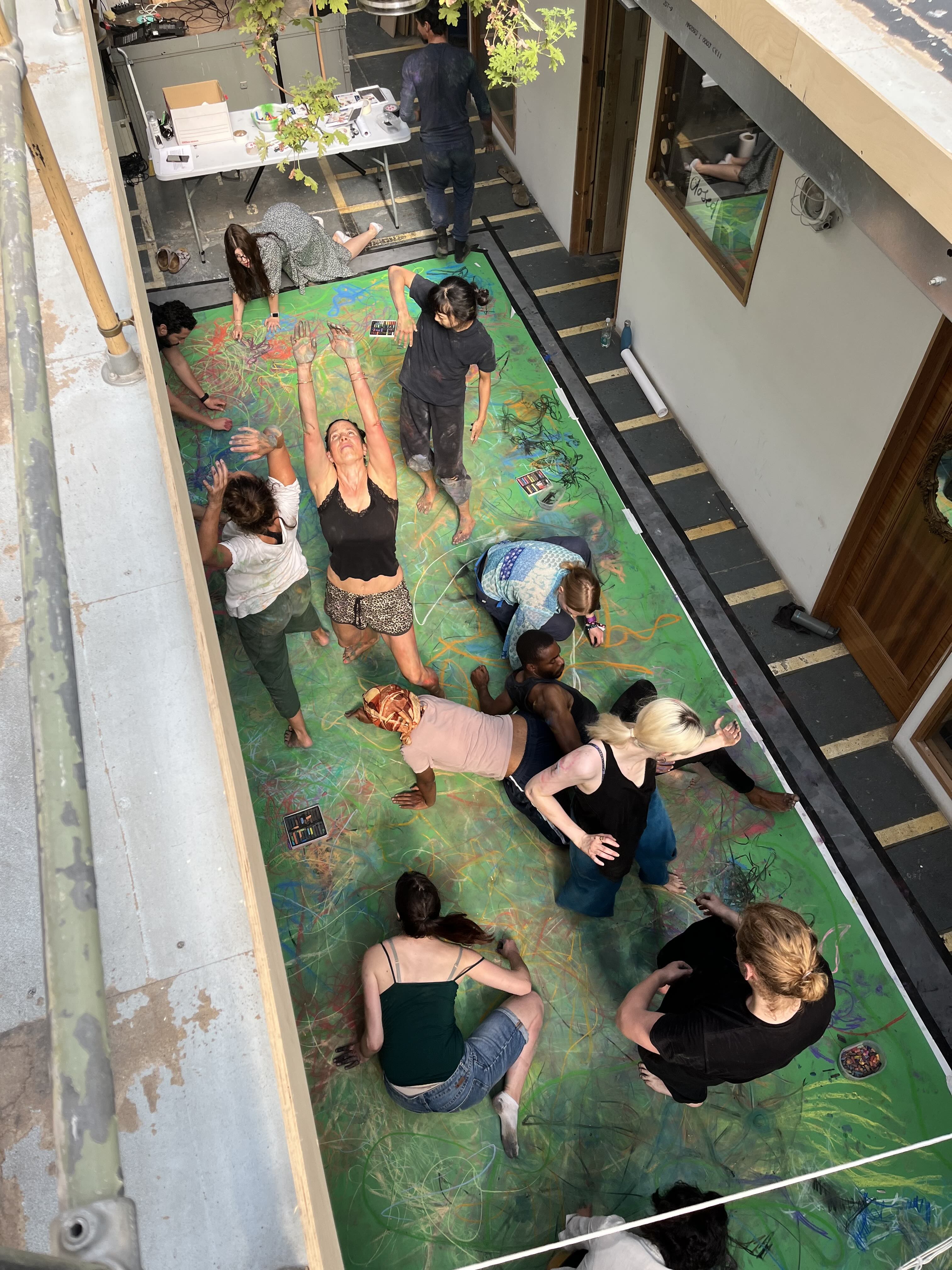
Queensrollahouse. Sept 2024
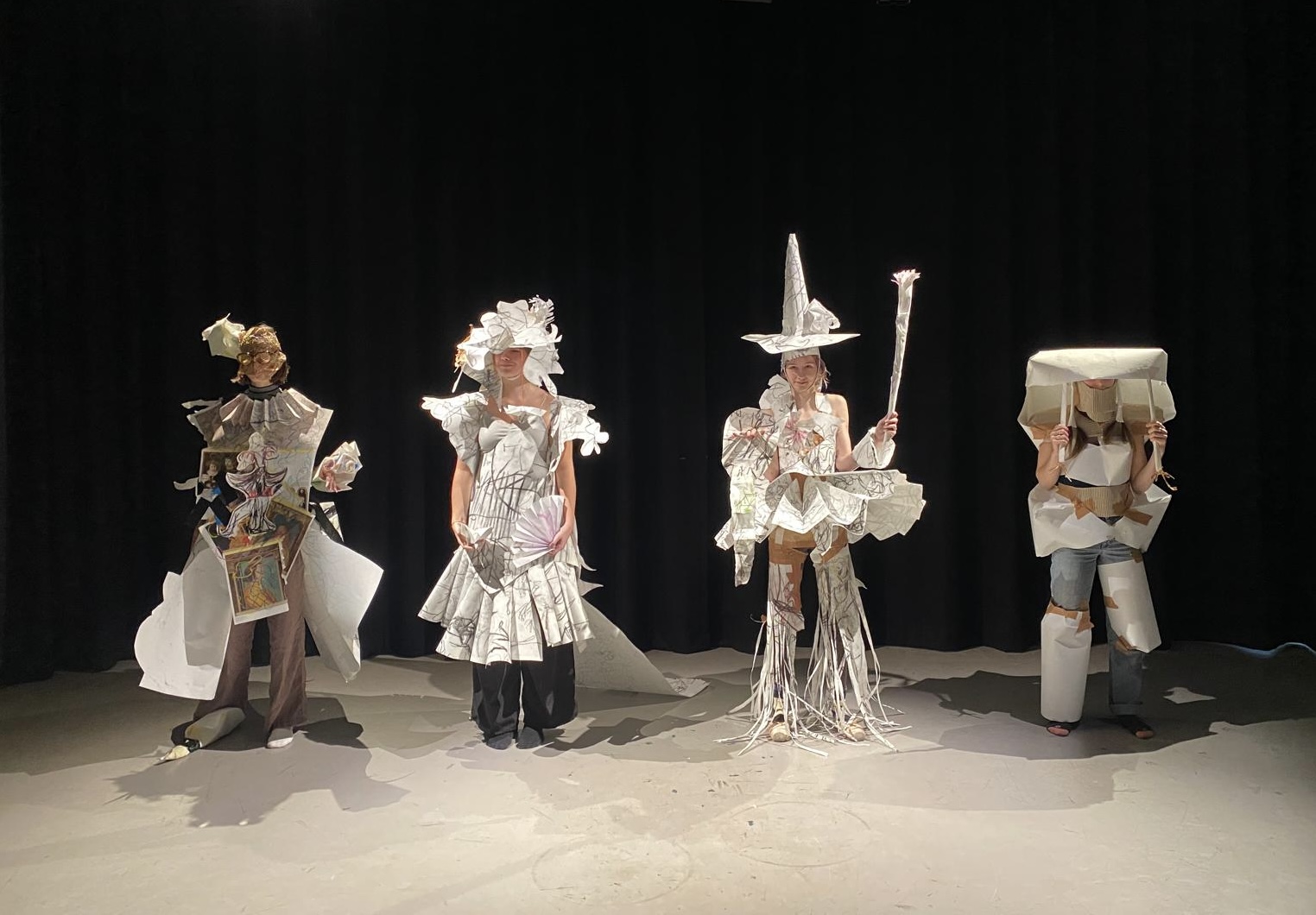
Drawings on paper became costumes
Tonneelacademie, Maastricht 2025
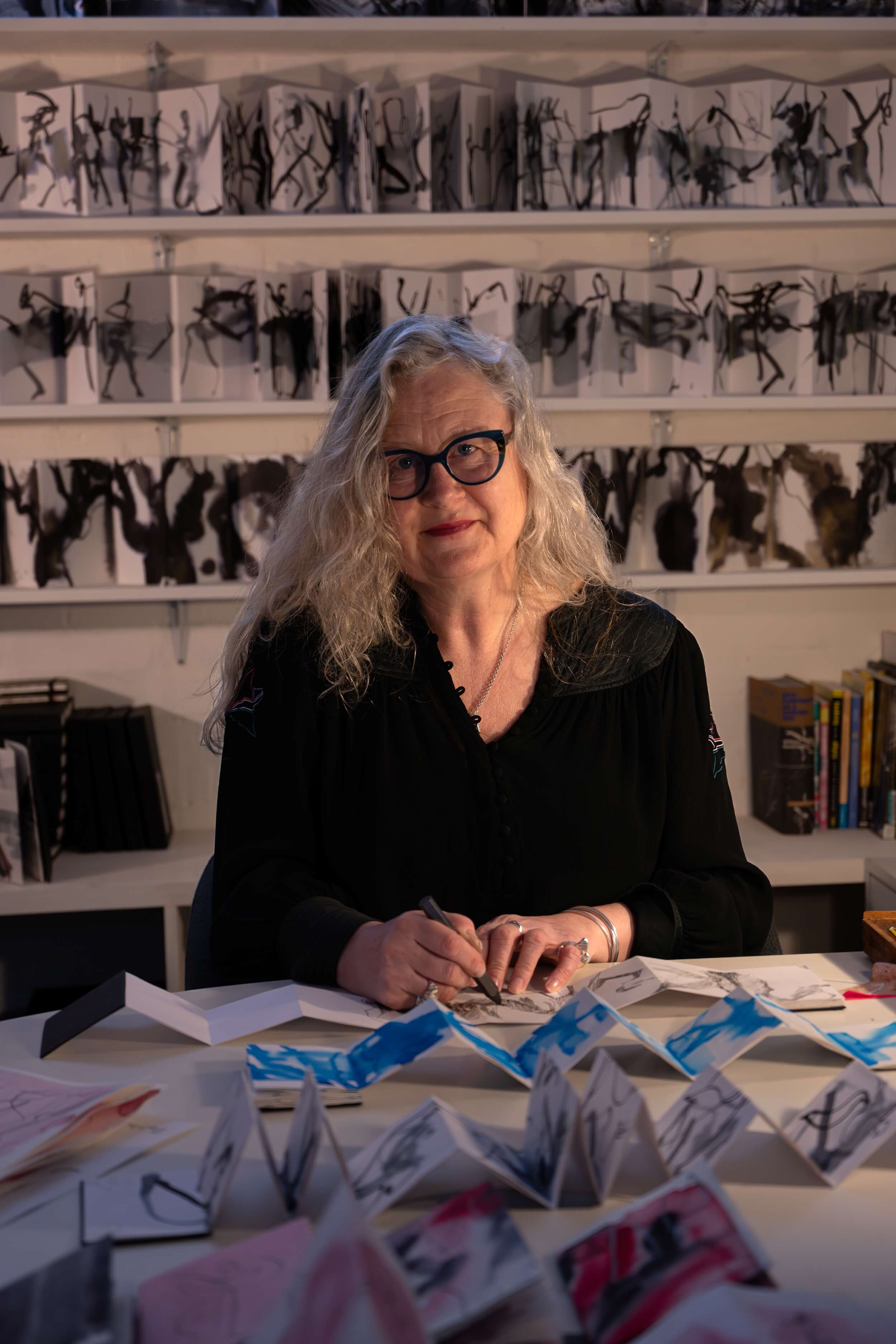
Image by Eloise Frey
February 2026
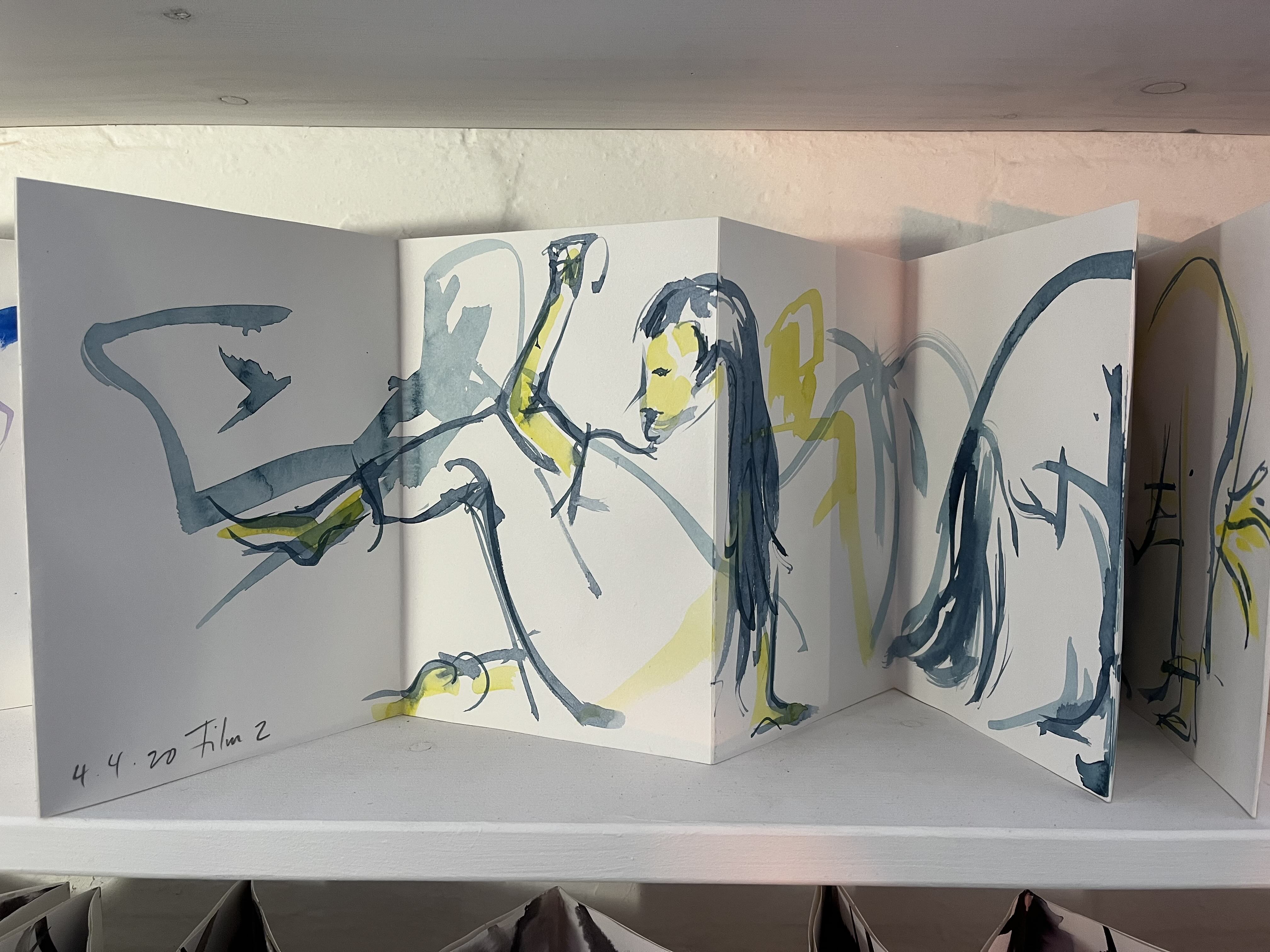
Watercolour on cartridge
Concertina book
20 x 15 cm, 4 m long
2020
FURTHER READING
Lucy directly references the following texts, practitioners, and writings in relation to her work with drawing, performance, and spatial thinking:
_ The Drawing Book: A Survey of Drawing, edited by Tania Kovats
_ Drawing Water: Drawing as a Mechanism for Exploration by Tania Kovats
_ The Eyes of the Skin by Juhani Pallasmaa
_ Oskar Schlemmer, in relation to the Bauhaus and the Triadic Ballet
_ Lucy Algar, Drawing Performance / Performance Drawing, published in Tangible Territory, Issue 6
