
LEA ROSE KARA
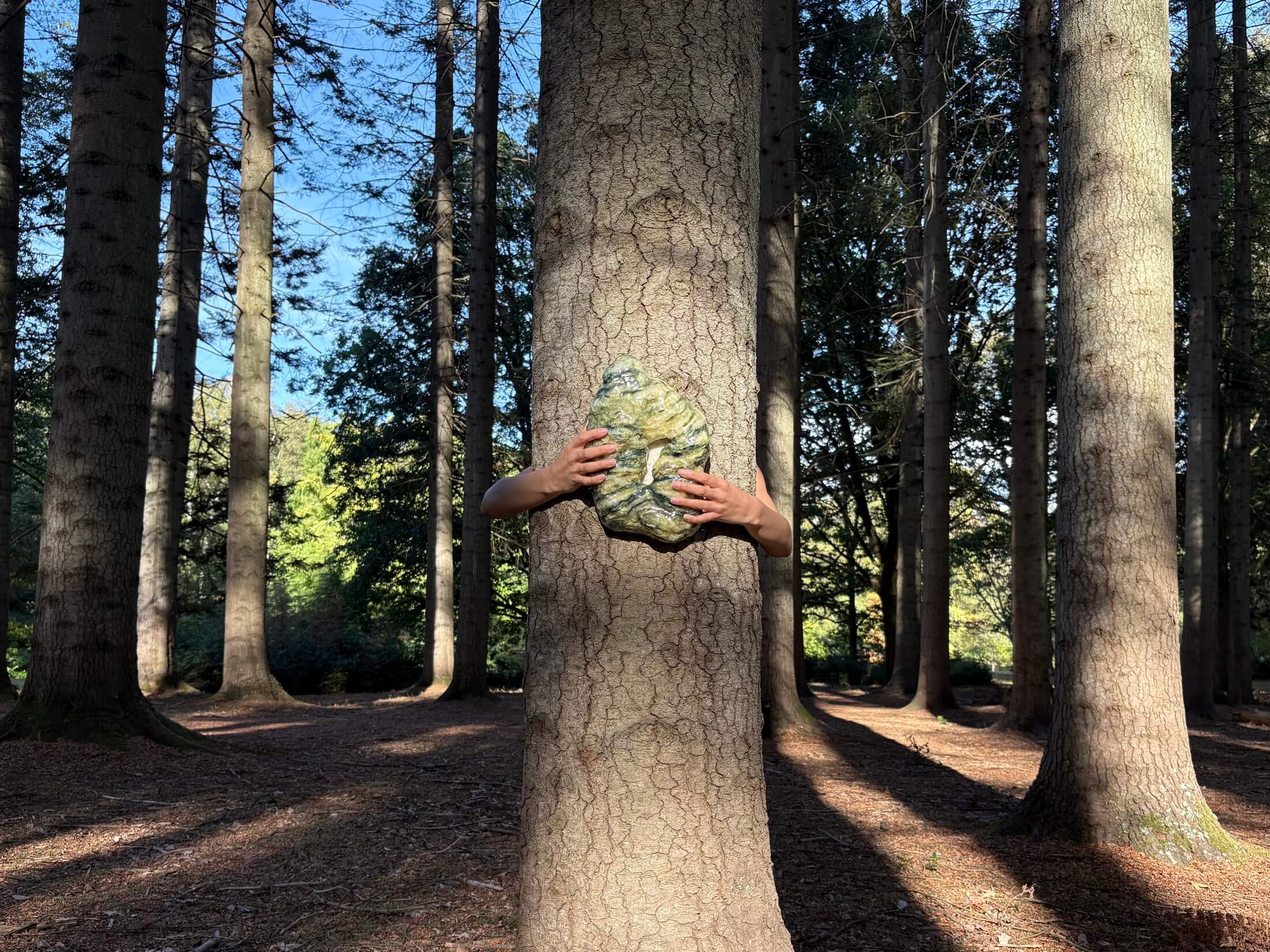
photos courtesy of the artist
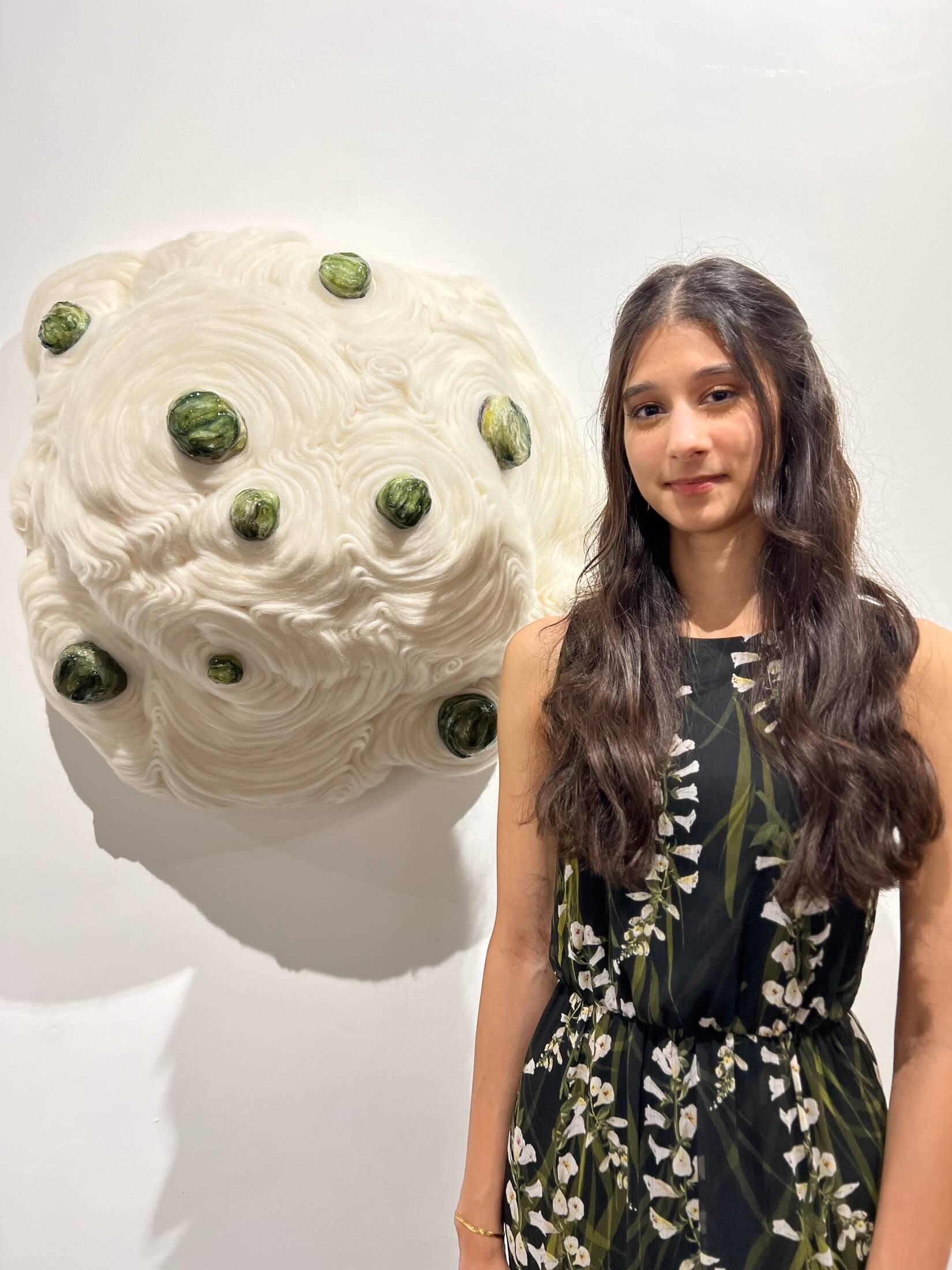
Lea Rose Kara’s practice explores the intersection of nature, science and archaic magick. Working with wool, resin, bronze and pigments made from flowers, berries and mushrooms, she treats organic matter as both subject and sculptural material. Her wall-based wool sculptures often have an alien-like presence, while their colours begin with foraging and field research. Drawing on biology, archaeology and epistemology, she questions how knowledge shapes our relationship with nature.
Originally from Kyiv and now based in London, Rose Kara completed an MA in Sculpture at the Royal College of Art in 2022, was selected for the 2025 Ingram Prize, and is currently longlisted for The Artist Prize 2026.
CONVERSATION
Current Work
How would you describe your artistic practice?
I make wool sculptures, usually designed to hang on a wall. I dye parts of the wool with pigments made from flowers, berries and mushrooms, working with local foragers or buying flowers from local farmers. Sometimes I apply the pigment wet and cast it in resin; at other times I prepare a dry pigment to incorporate later. The process is labour-intensive, and a work can take one to three months to complete.
The sculptural forms are inspired by nature, whether by the rocky outcrops and exposed stone formations of the Lake District or the tree-eyes and growths found in local forests, though my works often appear alien-like. I have also developed a technique I call “pressure stitching without using thread”. Wool is central, but I also work with resin, wood and bronze.
How did wool become such an important material for you?
I come from a fine art background and have worked with tonal drawing, bronze, performance and video art. During my MA at the Royal College of Art, I began visiting the textile department and met a student experimenting with natural dyes. Until then, I had incorporated branches and flowers directly into artworks or cast them in bronze. She showed me that plants could become pigments and impressions rather than just being used literally.
The textile tutor let me use the department’s steaming chambers during lunch breaks, so I spent months testing dyes on different fibres. Silk and cotton still felt closely associated with conventional textiles, while wool seemed more abstract and sculptural. Wool offered both a surface for colour and a material I could build into form. That discovery gave me the confidence to introduce colour into my practice in a more authentic way.
What led you to combine wool with resin?
Resin became a more significant part of my practice through a collaboration with the slow fashion brand Blue Nude. I was invited to create a detachable sculpture for a bustier, originally imagined as glass forms resembling meteoric gems. Glass would have been too fragile to wear, so I suggested resin, which I had used a little before.
Resin needs time to cure and a stable temperature, but the collaboration showed me how I could sculpt it and combine it with dyed wool. What began as a solution for one project became a lasting part of my sculptural practice and conceptual development.
Your work brings together nature, science and archaic magick. What connects these areas for you?
By archaic magick, I mean lost knowledge of the land, including the healing use of plants and their role in ancestral rituals. I travel across the UK to stone circles, burial chambers and other ancient sites for field research. Their placement, stone markings and possible uses all interest me.
I am also interested in how we have come to view nature as separate from us. Our ancestors understood it as a force that could give life but also take it away through disease or harsh conditions. Today, we often live in concrete cities and treat nature as “other”, despite depending on it for our survival.
The alien element in my darker sculptures relates to another area of research: the possibility that extraterrestrial matter carried by meteorites could have influenced life and evolution on Earth. I am fascinated by what we may not fully understand and alternative scientific theories about our species’ evolution.
What are you working on at the moment?
I am preparing my first solo booth and first art fair presentation for Fair Play Art Fair at One Marylebone from 15 to 18 October. I was invited to apply and selected as one of 70 solo-booth artists. It will be my second time curating a space entirely devoted to my work, bringing its different strands together in the relationship I want to create between them.
I have also begun a two-month solo residency at art’otel London Battersea Power Station. Once the fair finishes, I will concentrate on making and experimenting in my beautiful new studio.
Exploring your identity
How do the different strands of your work relate to one another?
There are three wool strands: white wool works, grey and black works, and newer spiky sculptures. I experimented with different types of wool, using a book covering around 150 breeds of sheep and testing samples of 64 before choosing the three best suited to sculpture.
The white works use merino wool. For the grey pieces, I use Herdwick wool, sourced directly from a farm when possible. These sheep are native to the Lake District, and mothers teach their lambs where it is safe to graze, keeping them attached to a particular area. Buying directly supports local communities and helps me know how the sheep are cared for. My darker sculptures are more closely connected to the alien strand of my research.
The spiky works, which use merino and Icelandic wool, began with my sculpture Ritual, which was selected for the 2025 Ingram Prize. That recognition gave me confidence to develop a new aesthetic direction in my practice. I hand-whittled the wooden spikes, wrapped them in wool and built the surrounding form through pressure stitching, incorporating flower pigments into the central resin stone.
Why is it important to you to position wool as a sculptural material?
When I began working with wool, I realised how strongly art materials are gendered. Wool is associated with fibre and craft, historically linked to women and the domestic sphere, and assigned less artistic and financial value than materials such as bronze or oil painting.
There is a double standard. A woman’s metal sculpture may be seen as more impressive because she is working with a material coded as masculine. Yet when a man works with textiles, the choice is often granted more artistic weight, institutional recognition and market value than the same work made by a woman. Fibre practices gained visibility in the 1960s and 1970s, but many women remained outside the category of fine art. Recent major exhibitions of artists such as Klára Hosnedlová and Magdalena Abakanowicz are helping to challenge that history.
I respect artists who identify with textile or craft art and want those categories to be valued equally. My position is different. I deliberately refuse to let wool’s historical association with those categories determine how my sculptures are classified or valued. I still honour those traditions through natural dyes and sometimes stitching, but I present wool as an independent sculptural material and describe my work through the language of sculpture. I want it to be recognised on equal terms with other fine-art materials.
How You Bring it to Life
How do you approach the presentation of your work?
Presentation depends on context. At an art fair, I need to be strategic, showing strong and recognised works alongside pieces that engage people encountering my practice for the first time. A solo exhibition is different: I want to create an environment the viewer enters, where the relationship between the sculptures and the space becomes part of the experience.
What role does language play in how the work is understood?
I often need to explain to curators and writers why I use the word sculpture. Labelling can be limiting, but it still shapes how art is understood and valued, so I make sure texts describe my work through a sculptor’s lens.
I never trained in weaving or traditional textile techniques, so I approached wool as I would bronze, testing what it could do and how it could hold form. When people see my sculptures, they often ask what they are made from and reconsider what they expected wool to look like. Both the work and the language around it should challenge how materials are classified.
Looking ahead
What would you like to explore next?
During my residency, I want to try crushed lapis lazuli, a pigment I have never used before, and see how its rich blue behaves in resin. Unlike my usual pigments from plants and fungi, it comes from stone. I am also researching the history of pigments in ancient Egypt, among the Maya and elsewhere. Research is important to me, but the real learning happens through experimentation and play.
I work intuitively and rarely create maquettes or measurements before starting a sculpture, unless it is a commission or someone else’s money is involved! I prefer to allow the material and creative source to guide me, preserving some of the raw energy of the process. Larger sculptures inevitably require logistical planning, but I try to balance that structure with a more fluid way of making.
published on 14th October 2026
www.learosekara.co.uk/instagram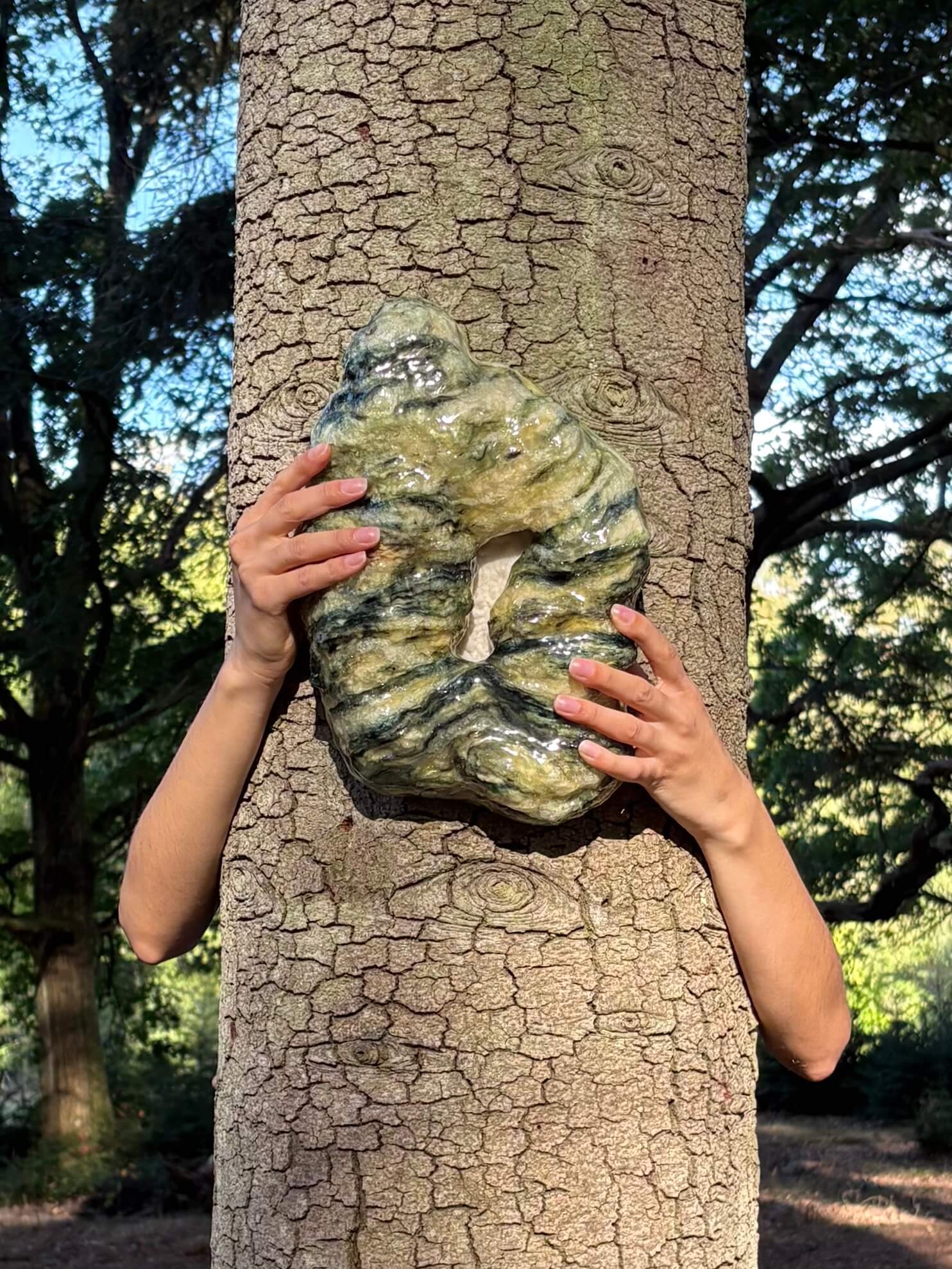
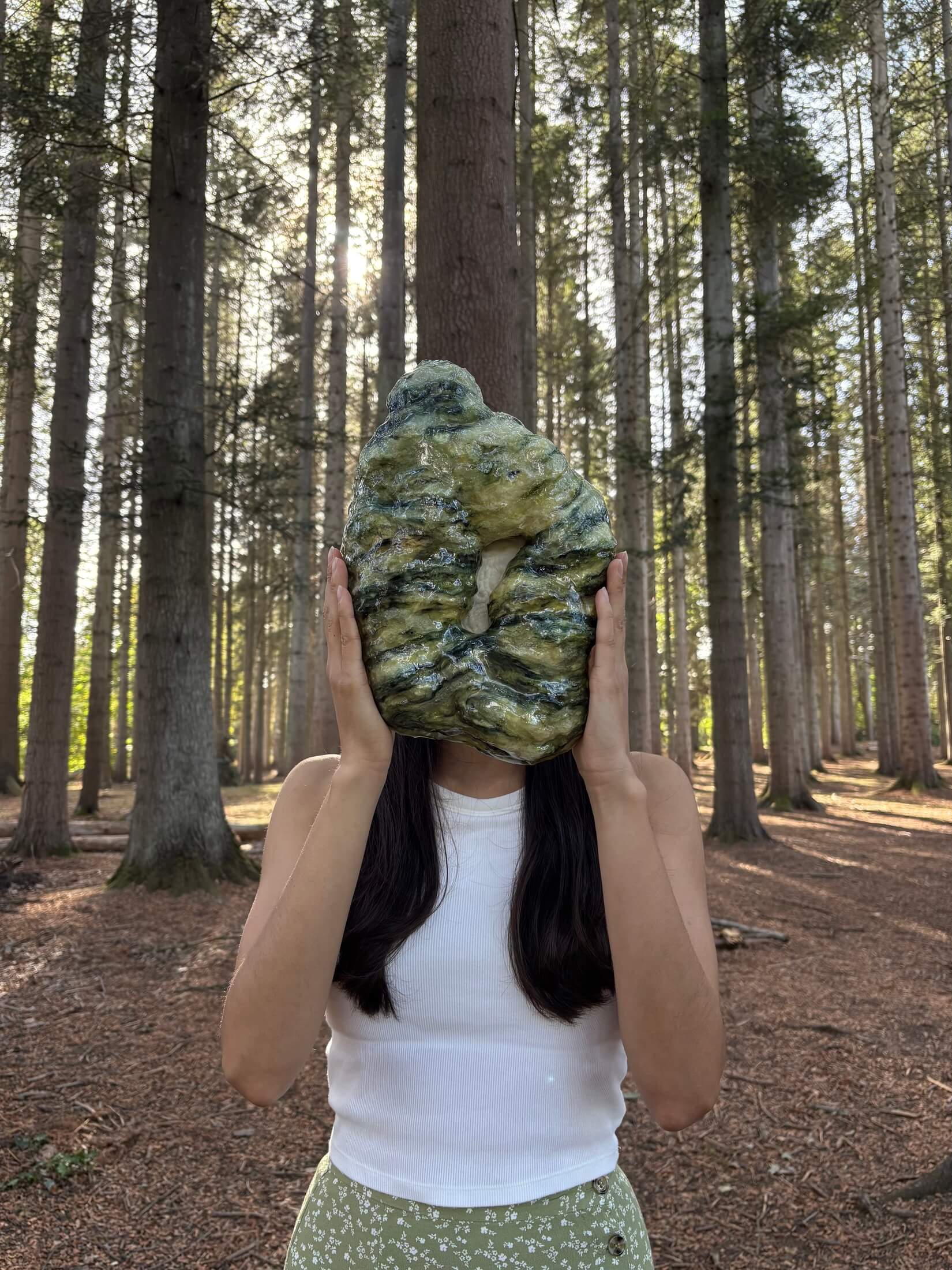
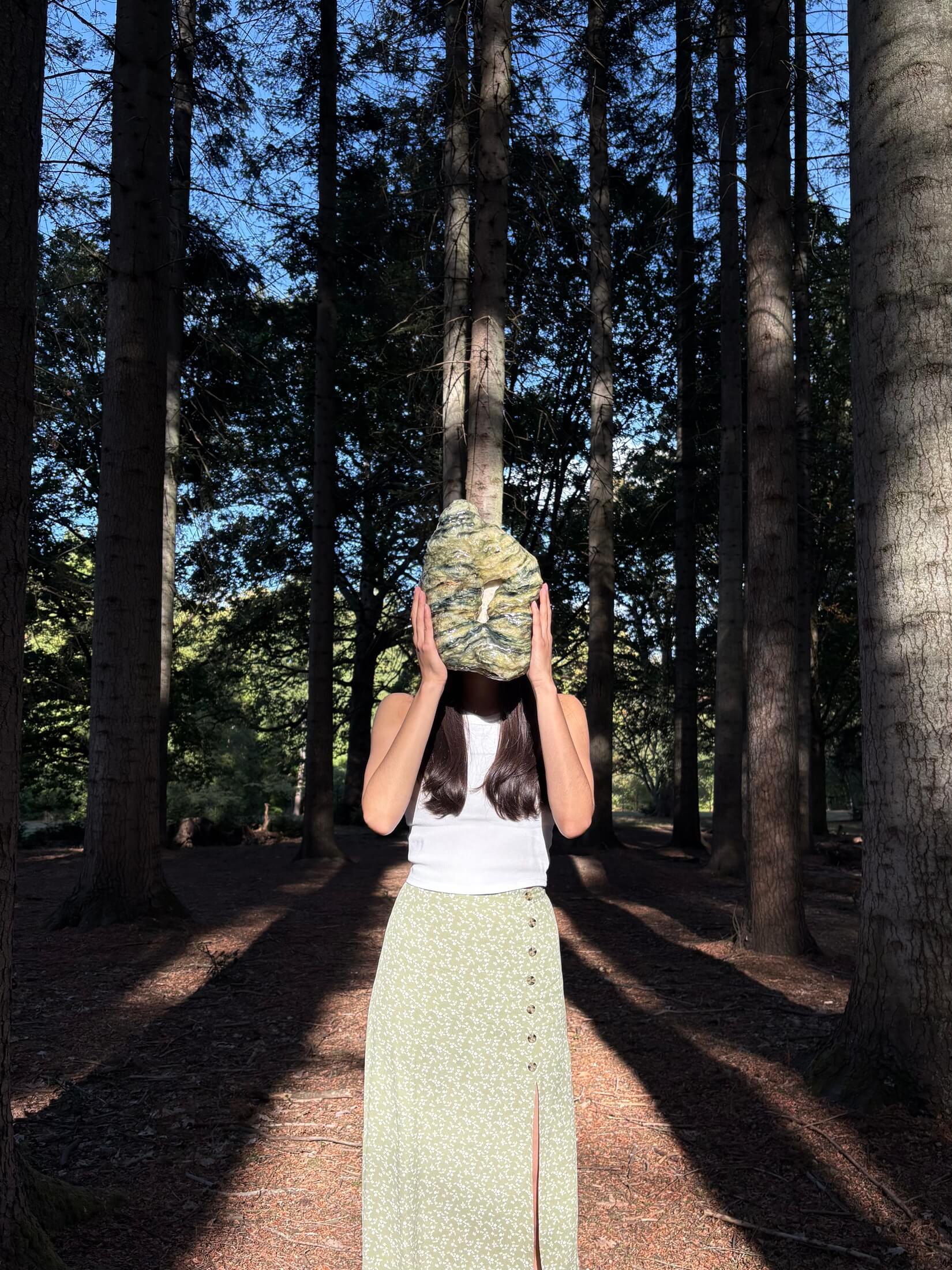
resin, wool, and wool dyed with
chrysanthemums and aster on wood
34 x 23 x 7.5 cm
2023
eye shaped marks on the tree trunk
left over from self-amputation of tree branches.
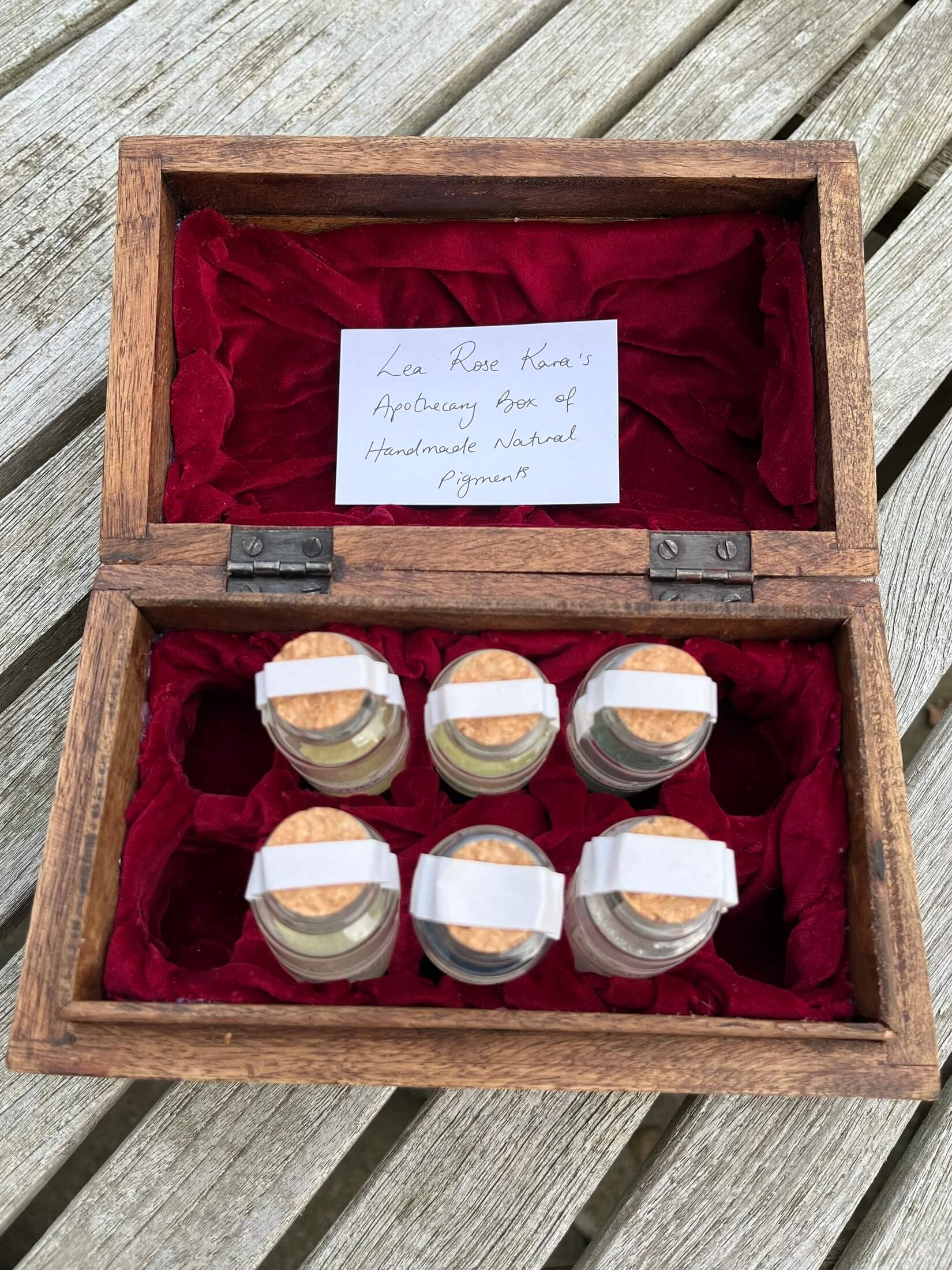
that I'm sculpting with"
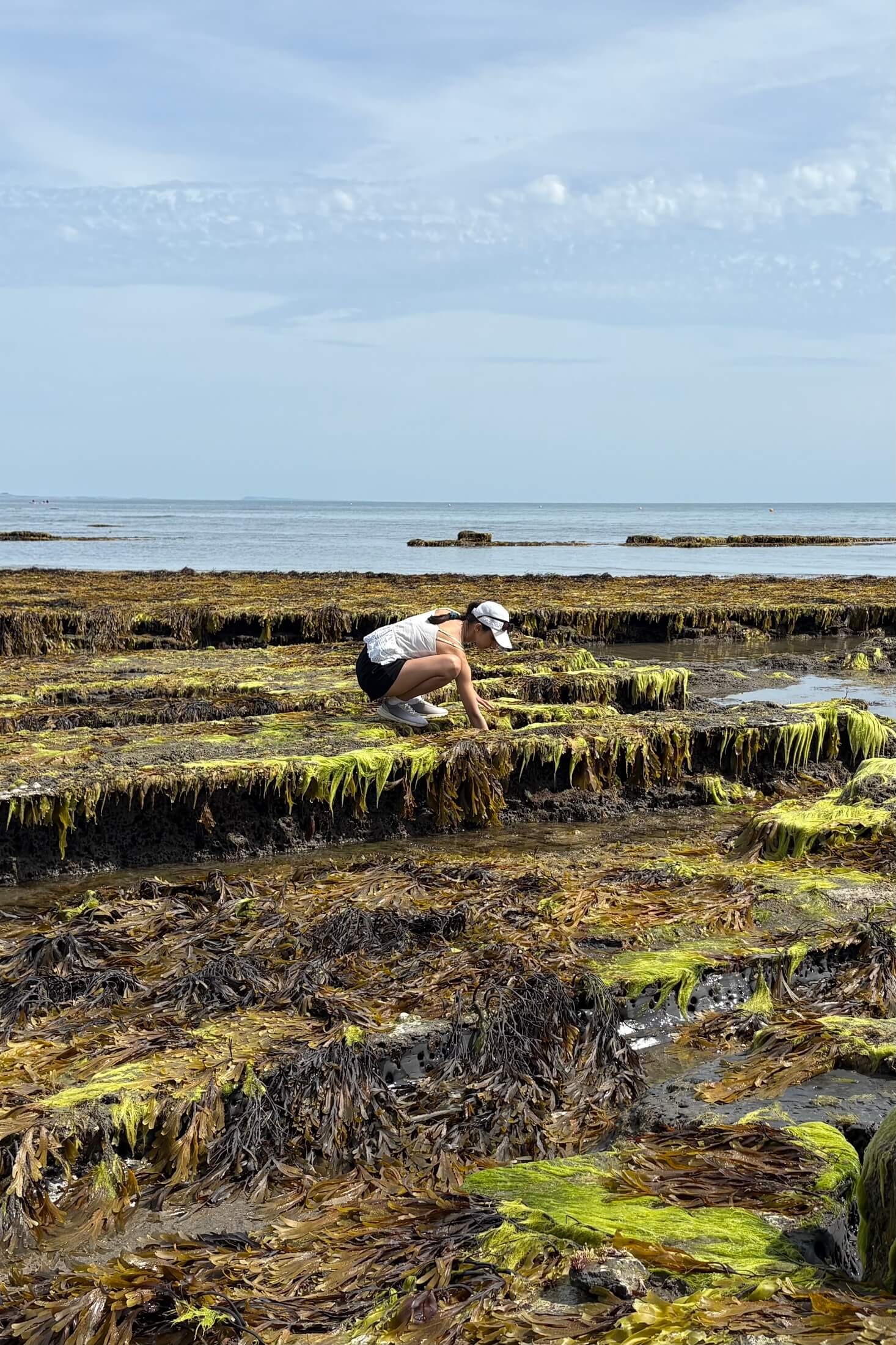
Jurassic Coast, Devon, UK
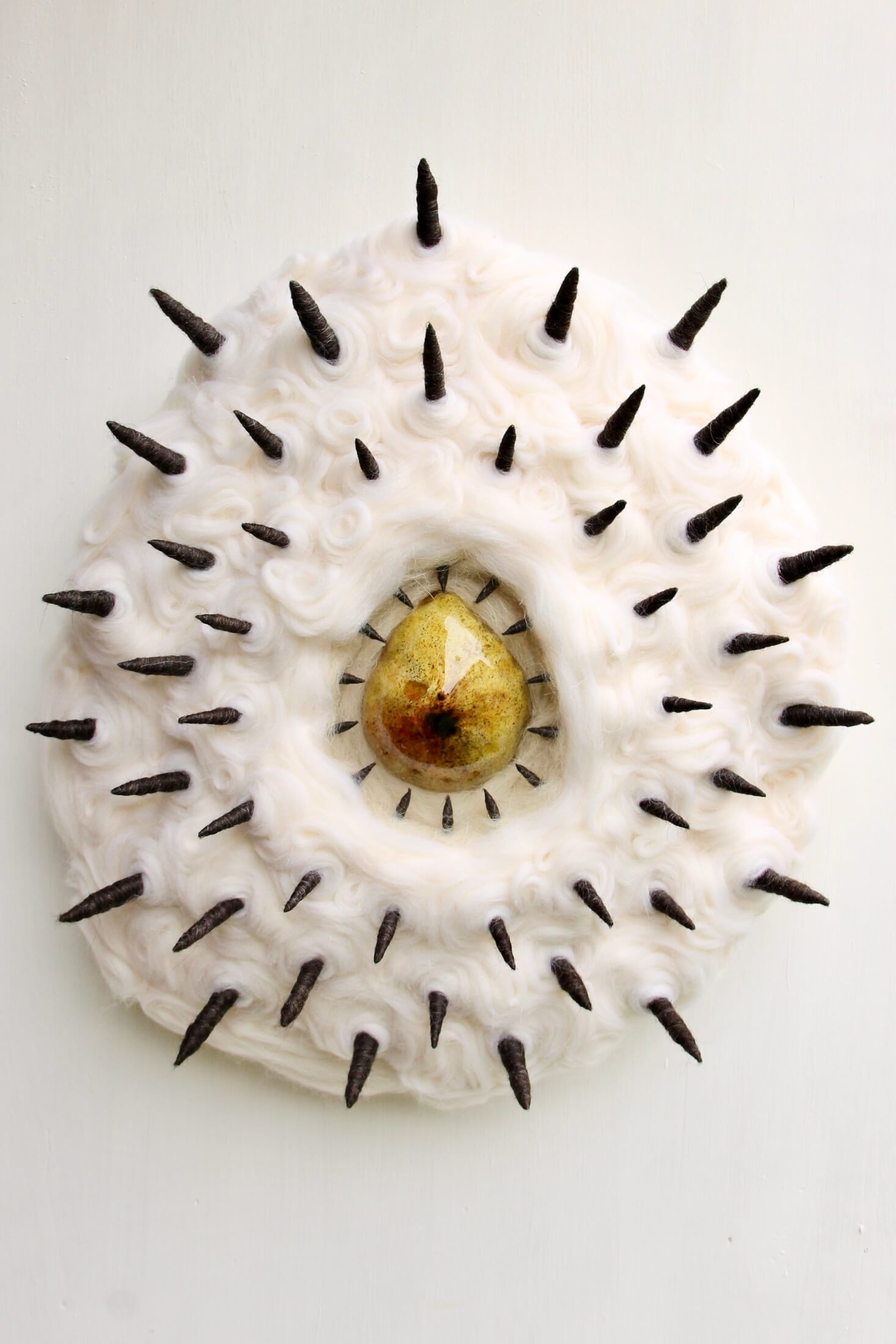
resin, wool and handmade
flower pigments on wood
50 x 43 x 17 cm
2025
