KELLY SWEENEY
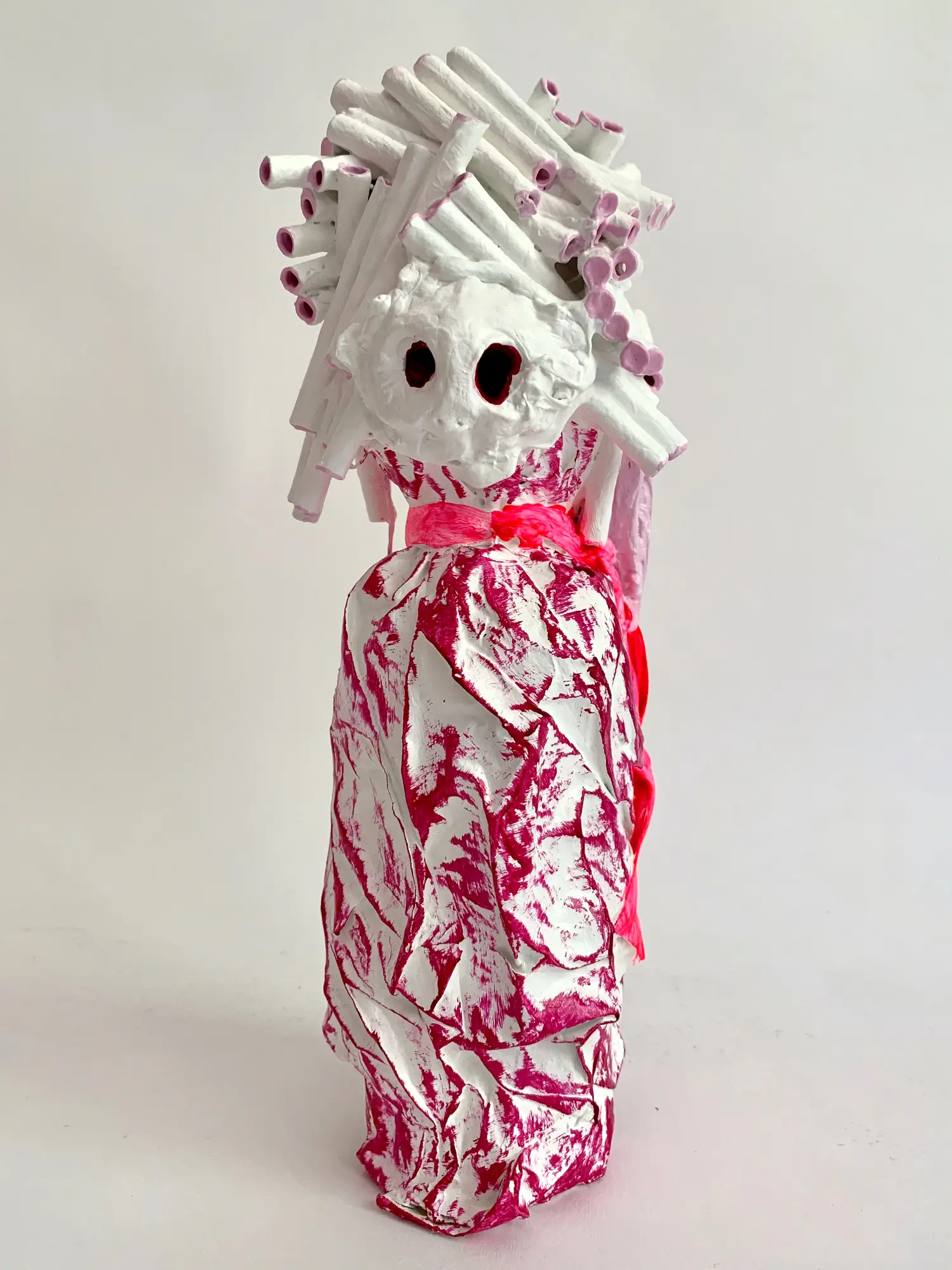
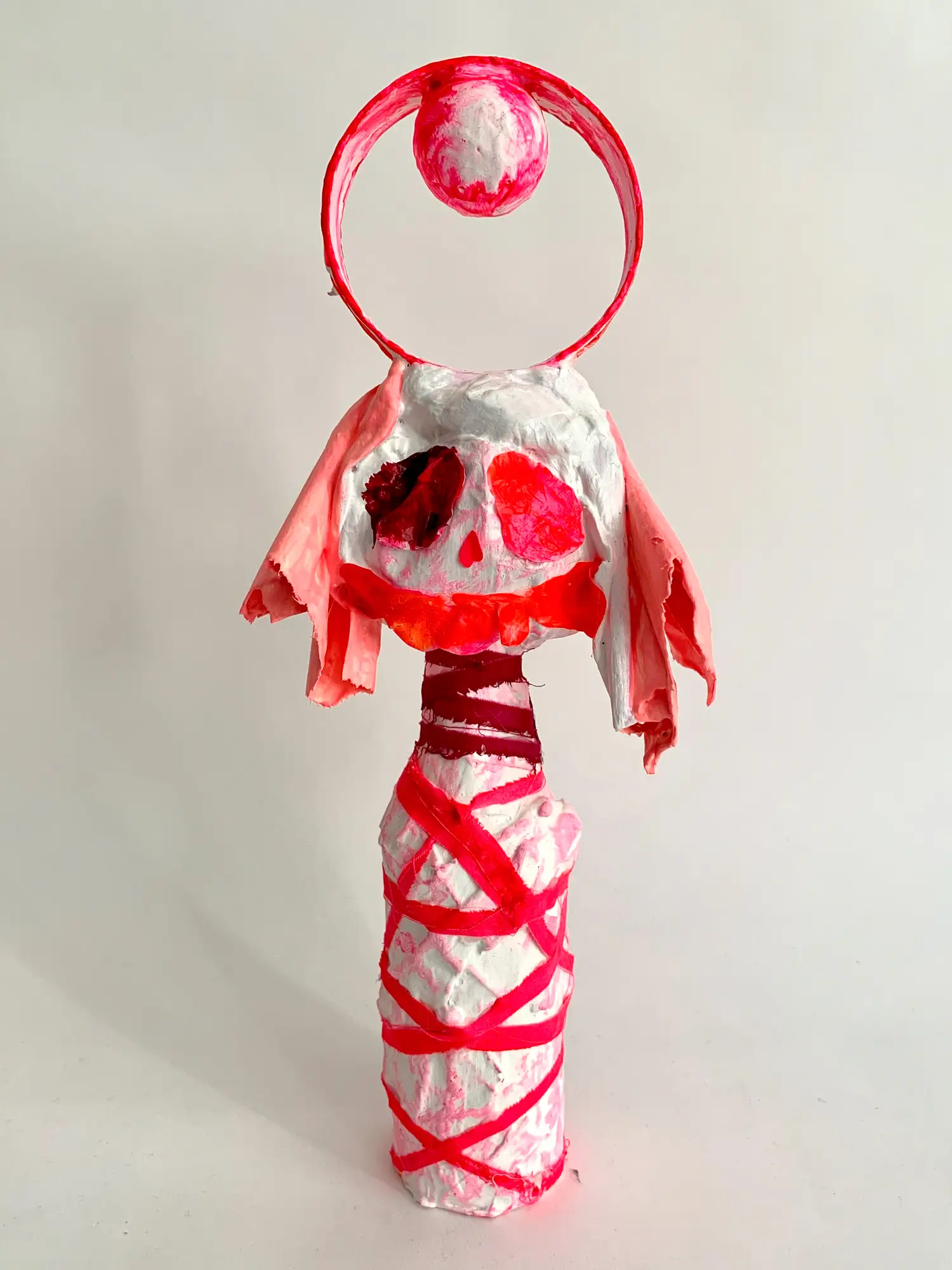
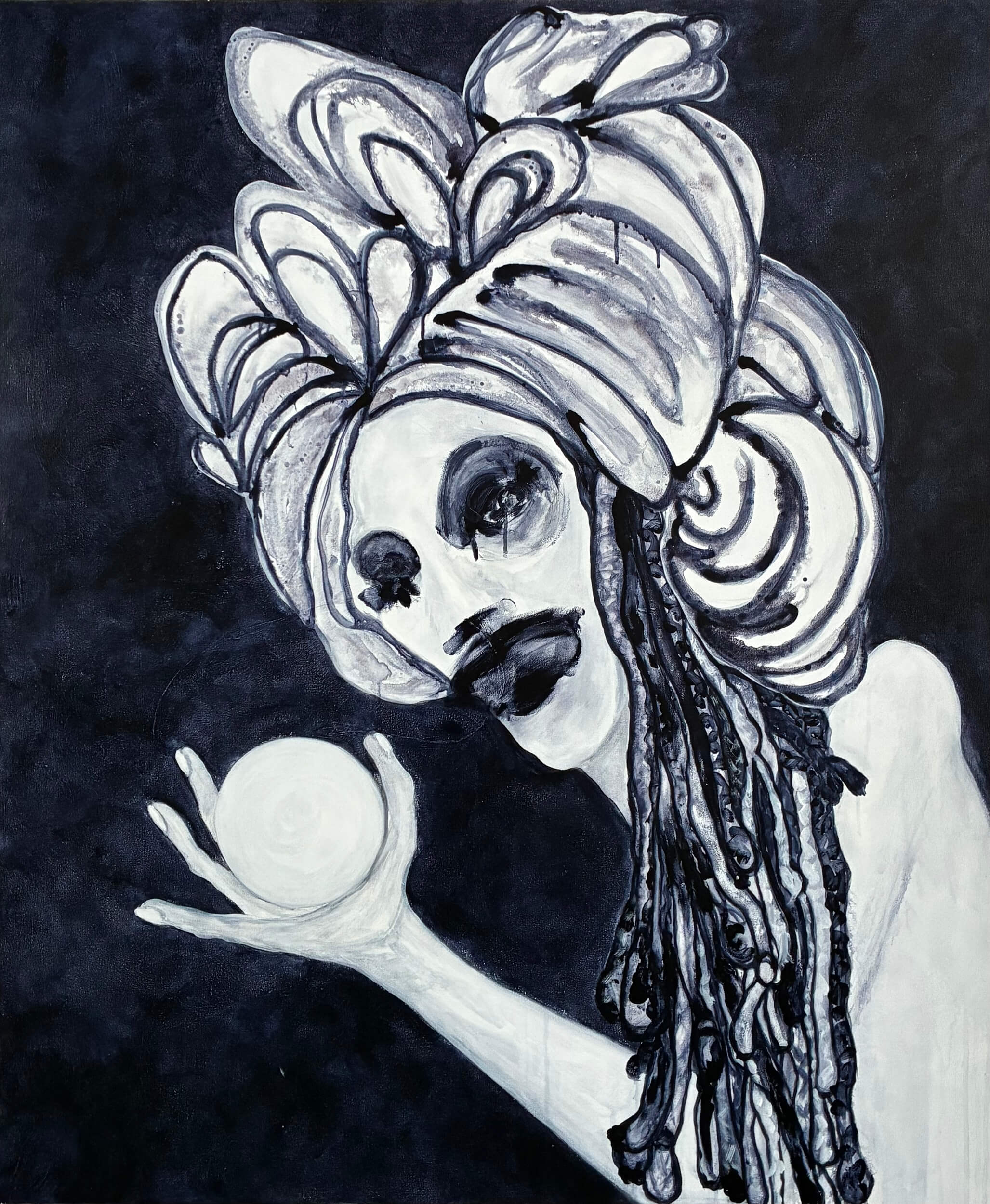
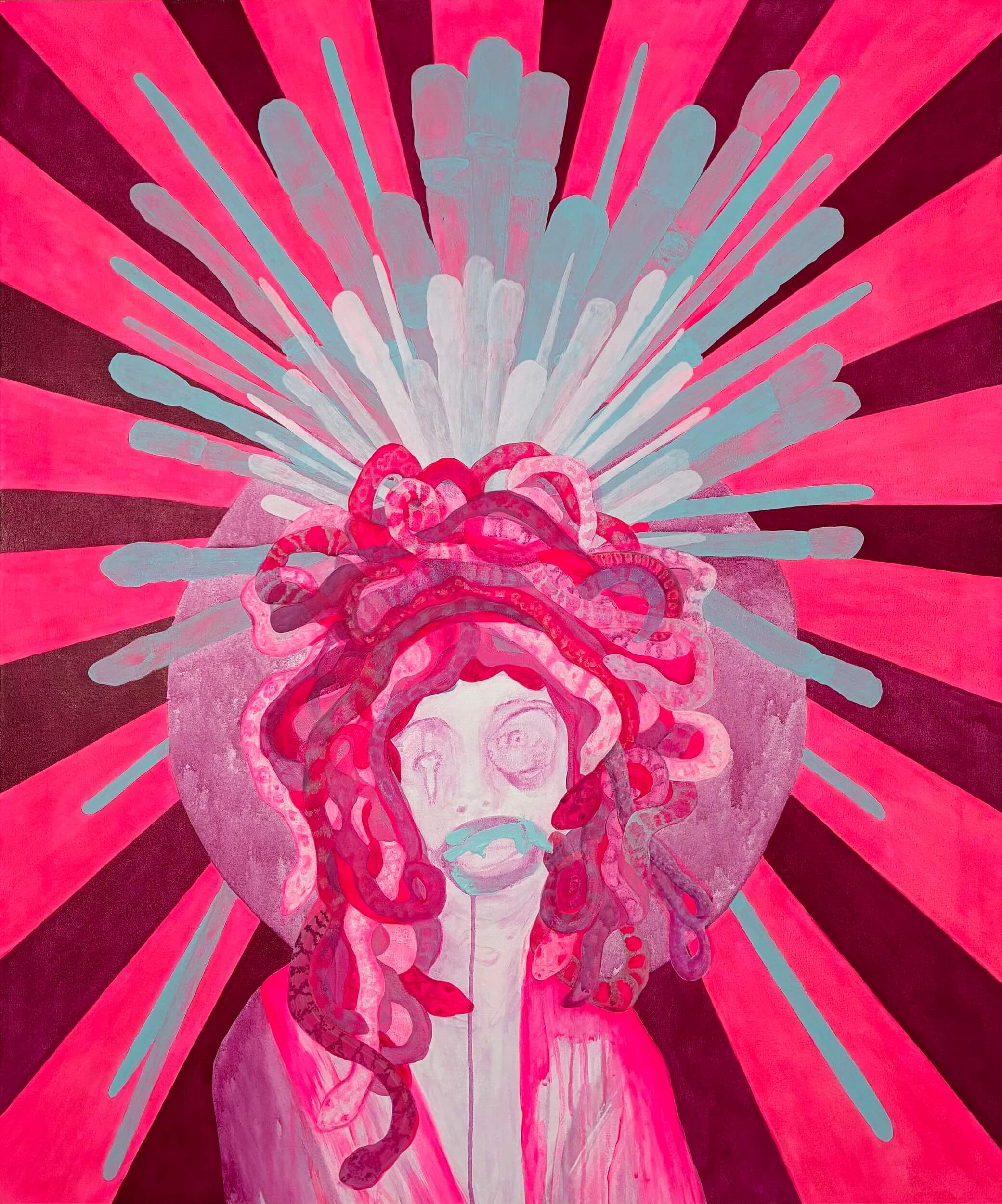
Kelly Sweeney creates a cosmology of otherworldly entities across painting, sculpture, drawing, film and performance. Born in East London, where she lives and works, she studied Fine Art at Nottingham Trent University and completed an MA at Chelsea School of Art after a career in art education. Her practice draws on the supernatural, the carnivalesque, handmade forms and everyday ritual. Working with paint, discarded packaging, fabric and other repurposed materials, she gives physical form to beings that occupy an otherworldly space between the familiar and the unknown.
CONVERSATION
Current Work
How would you describe your artistic practice?
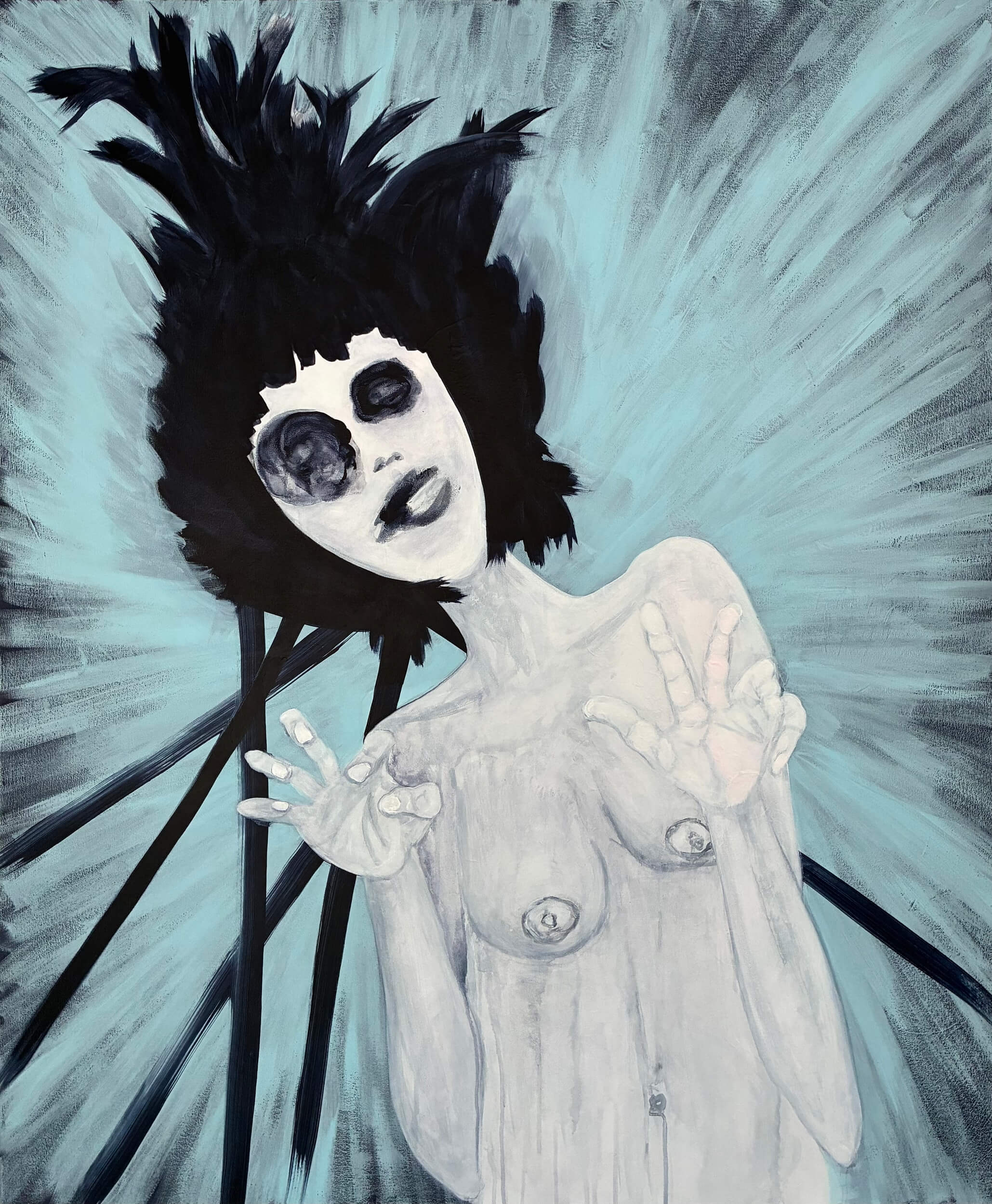
I think of my practice as spawning its own cosmology of otherworldly entities that manifest through painting, sculpture and drawing, with what I describe as a dabble in film and performance. The work is diverse, but it grows from an ongoing interest in the potential for alternative spaces, places and personas, and in what might exist beyond the human.
Where did your attraction to the supernatural and the carnivalesque begin?
The supernatural has always felt normal to me. As a child, I was drawn to the witch, the monster, the ghoul and the ghost, rather than the human or the princess. The strange worlds of 1980s children's television, film and literature also had a huge influence on my visual language. So much was physically made, from puppets and hand-drawn animation through to costumes. I was once dressed in a harlequin outfit made by my nan from crepe paper, and the harlequin later became a recurring entity and creative collaborator in my work.
The carnivalesque remains a constant reference. I am drawn to theatricality and its potential for transformation, as well as belief systems and practices that connect us to something greater through everyday ritual. I consider making itself a magical practice.
How do painting, sculpture and film relate within that world?
Making has always felt necessary to me, and I like it to be physical and hands-on. When I work, I return to something primal: making with my hands, painting directly onto canvas with them, wrapping, binding, moulding and repurposing accessible materials.
Painting and sculpture share the same materials, palettes and visual language. I think of paint as the elixir or life force of my practice, so it has to be everywhere. My sculptures may include hand-painted fabric or undergo a ritual dunking in paint. I also push acrylic beyond painting: it can be sculpted, moulded, watered down or sprayed.
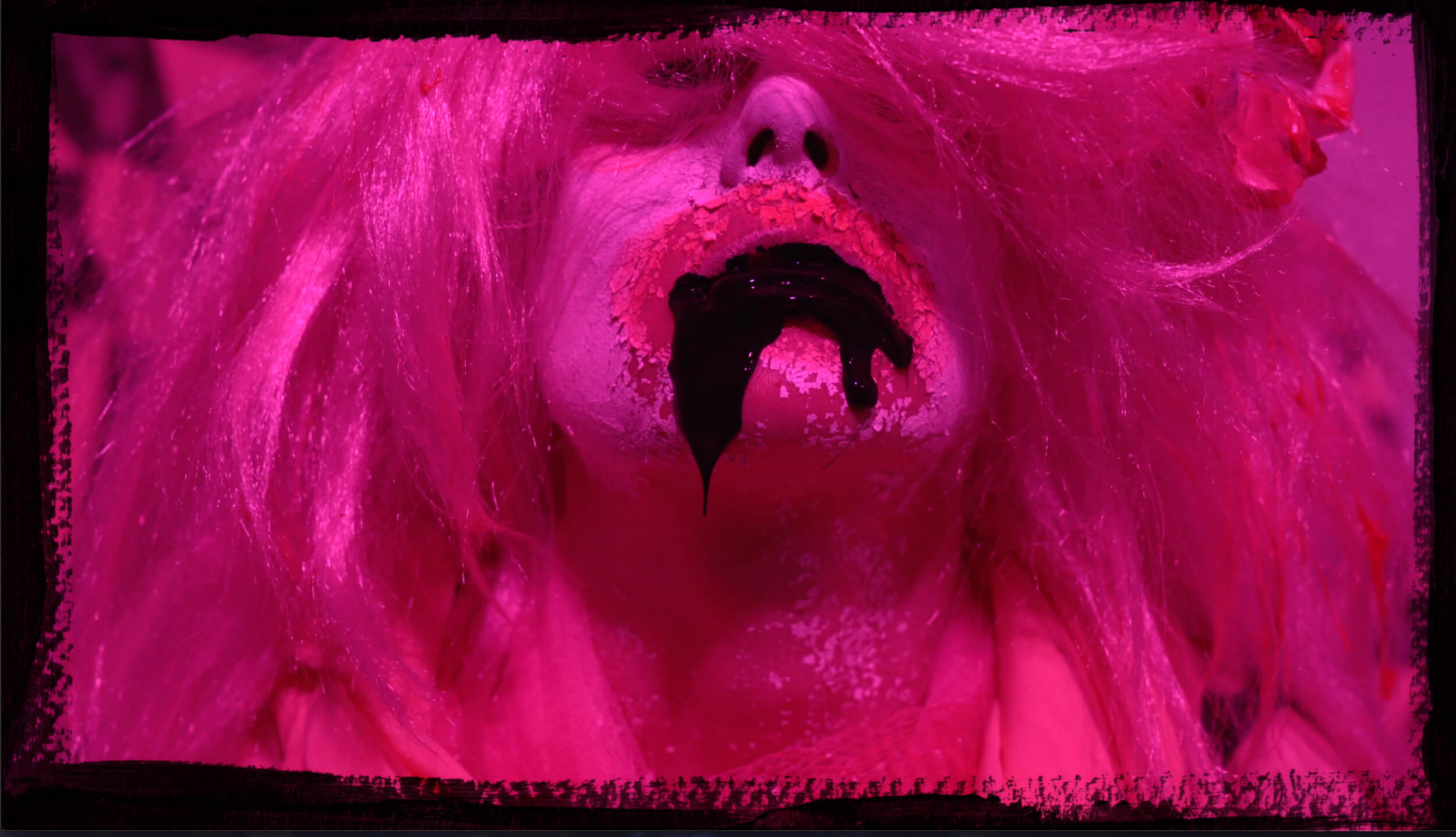
The paintings feel like images of otherworldly deities, while the sculptures honour them. Smaller sculptures often become totems, influenced by ancient amulets, carvings, figurines and mummified animals. Even when I make films, everything must physically exist. For Colour Me White and Colour Me Pink, the lighting, costumes, props and colour were created on set. The films allowed me to become entities that had previously existed only through painting, sculpture and drawing.
What are you working on at the moment?
Rather unusually for me, I have recently been giving time and energy to documenting my work and considering how my practice exists digitally. Updating my website is something I repeatedly postponed because I would always rather be in the studio making.
I am also preparing to begin a new body of work. At the moment, I am researching, reading and making space for things to land before I begin. I call this stage “hunting and gathering.”
How does a new body of work develop for you?
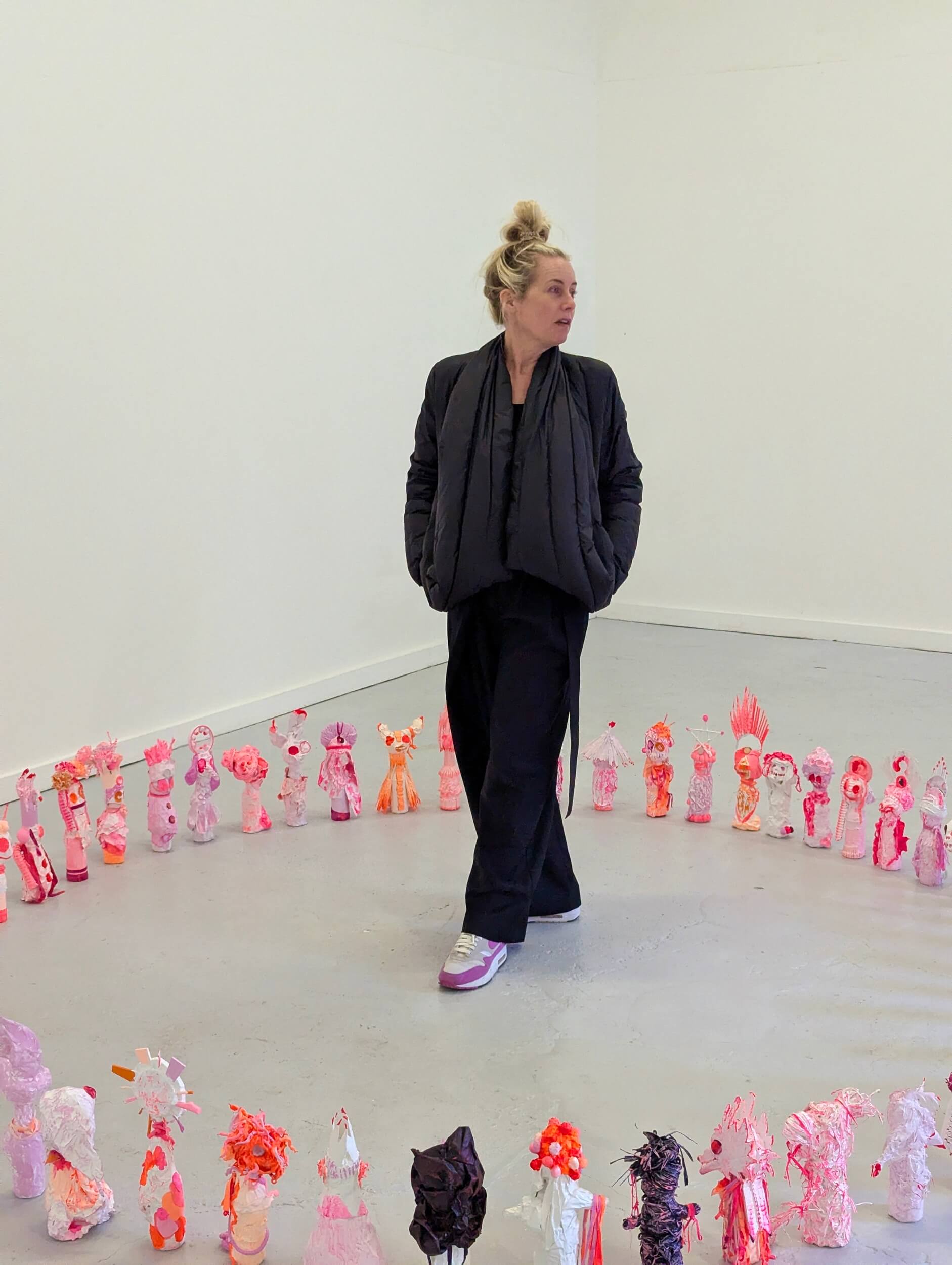
I tend to work cyclically and in series. The Gathering, for example, involved 52 sculptures and 52 accompanying drawings developed over two years. The process becomes obsessive, then stops, and I can feel disconnected for a while as I gather my thoughts before beginning again. It is a boom-or-bust way of working, and I am still not sure whether that rhythm is helpful. But I am also an all-or-nothing person, so perhaps that is simply how it is.
Exploring your identity
What is your relationship with the entities you create?
I think I want to live in that world and participate in it. I sometimes wonder if, as an artist, I am physically building it for myself.
The entities feel like collaborators. I might govern the process, but I am not necessarily in control of it. I imagine the sculptures continuing to exist when I leave the studio. They have their own agency, energy and sense of self; they feel incredibly sentient to me.
I know a work is finished when I feels like it is everything it needs to be. The energies manifest with many unknowns which I like to harness - they can feel unsettling and contradictory. I trust the entities implicitly. They do not scare me, although I wouldn’t necessarily mess with them.
What happens when you embody those entities yourself?
There is tension between the space I am comfortable taking up in my personal life and the territory I want to explore as an artist. In everyday life, I dislike attention and would be terrified of performing in a play. Yet performance feels important within the practice. When I made Colour Me White and Colour Me Pink, I did not rehearse or even try on the finished costumes beforehand. I wanted to inhabit the personas without deciding in advance how they would move or communicate. Watching the films back can feel like watching someone else.
I used to understand the subject matter as separate from me, although connected. As the practice evolves, I am beginning to ask whether these entities are aspects of me, and whether the work is more autobiographical and personal than I previously acknowledged. I do not have a concrete answer, and I am not sure I want one.
How does gender appear within this cosmology?
When I speak about energy, I am not necessarily referring to gender. The harlequin feels like a “he” in energy, but that does not mean the harlequin is male. Recent work has increasingly considered the divine feminine, which I feel connected to as a woman, while the beings themselves often transcend gender. They may be androgynous, or male beings presenting as female. I believe we all possess male and female energy in varying ways. These are energetic beings captured in paint, rather than figures that need to make sense according to the physical human world.
Fluorescent colour is a recurring presence in your work. What does it mean to you?
Fluorescent paint has always felt like a magical and slightly obnoxious substance to me. I enjoy the limits it places on a palette and the way it seems to ooze and bubble through my practice.
But it does not have to be there. I have left my recent totemic sculptures, The Graces, white, and my last two paintings have no fluorescent colour. I do not want to add it for the sake of it when it does not feel right for the work. I always return to its toxicity and allure.
How You Bring it to Life
How do you approach the presentation of your work?
I enjoy creating immersive environments and working across disciplines. For Night Comers, the space was lit with pink lights that suggested grow lights for the orchid beings, an imagined ancient civilisation inspired by the ghost orchid. My friend and collaborator Martyn Riley created a swamp-like soundscape. I value inviting other people to interpret my world through skills I do not have.
My ideal presentation might resemble a ghost train or circus tent, with sound, lighting, performance and physical interactive elements. I am less interested in digitally led environments. I see the films as self-contained recordings of something physical, but I like bringing their material world into an exhibition. When Colour Me Pink was shown in Witches, Scamps and Things, I created an immersive screening room with a covered sofa, a hand-painted curtain and props from the film.
What role do studio encounters play in how you share the work?
I think it depends on who it is and purpose of the of the work being shared.
I hold studio events throughout the year, inviting people on my mailing list to see new pieces or work in progress. It is a way to bring people together, share the work directly and hear what it brings up for them.
Sometimes the encounter responds to the focus of a particular studio exchange for example if it is a curator, artist or collector with particular interests
How do people respond to the work?
I am always interested in people's reactions because they often recognise something strangely familiar and personal to them. Some are drawn towards it, while others feel repelled and tell me the work would give them nightmares. Despite the bubble-gum palettes I sometimes use, the entities cannot entirely be trusted. However small or appealing they appear, there is always uncertainty about their intentions: if you touch one, it might bite your hand off.
Looking ahead
What would you like to explore next?
I am considering a large series on paper, combining painting and drawing. I feel freer on paper and prefer its texture for drawing, so I want to see what happens when the smaller experiments I have been making increase in scale and become more developed.
I am also considering working with people as subjects for the first time. I am interested in whether I can capture an unseen version of someone, harness their energy and bring it through my visual language of the carnivalesque and the otherworldly.
published on 19th November 2026
www.kellysweeney.co.ukinstagram