HOA DUNG CLERGET
Hoa Dung Clerget's practice draws on intimate family memory and the collective memory of the Vietnamese diaspora. Working across video, installation, painting and sculpture, she often begins with materials and objects from everyday diasporic life, from nail gel and bamboo blinds to brooms and lotus seeds.
Through them, she explores labour, migration and the construction of Vietnamese women's identities while questioning established hierarchies between art and popular subculture. Alongside her artistic practice, Clerget co-curates No Place Like Home with KV Duong, bringing artists of Vietnamese heritage together through exhibitions, workshops, talks and discussion.
CONVERSATION
Current Work
How would you define your artistic practice?
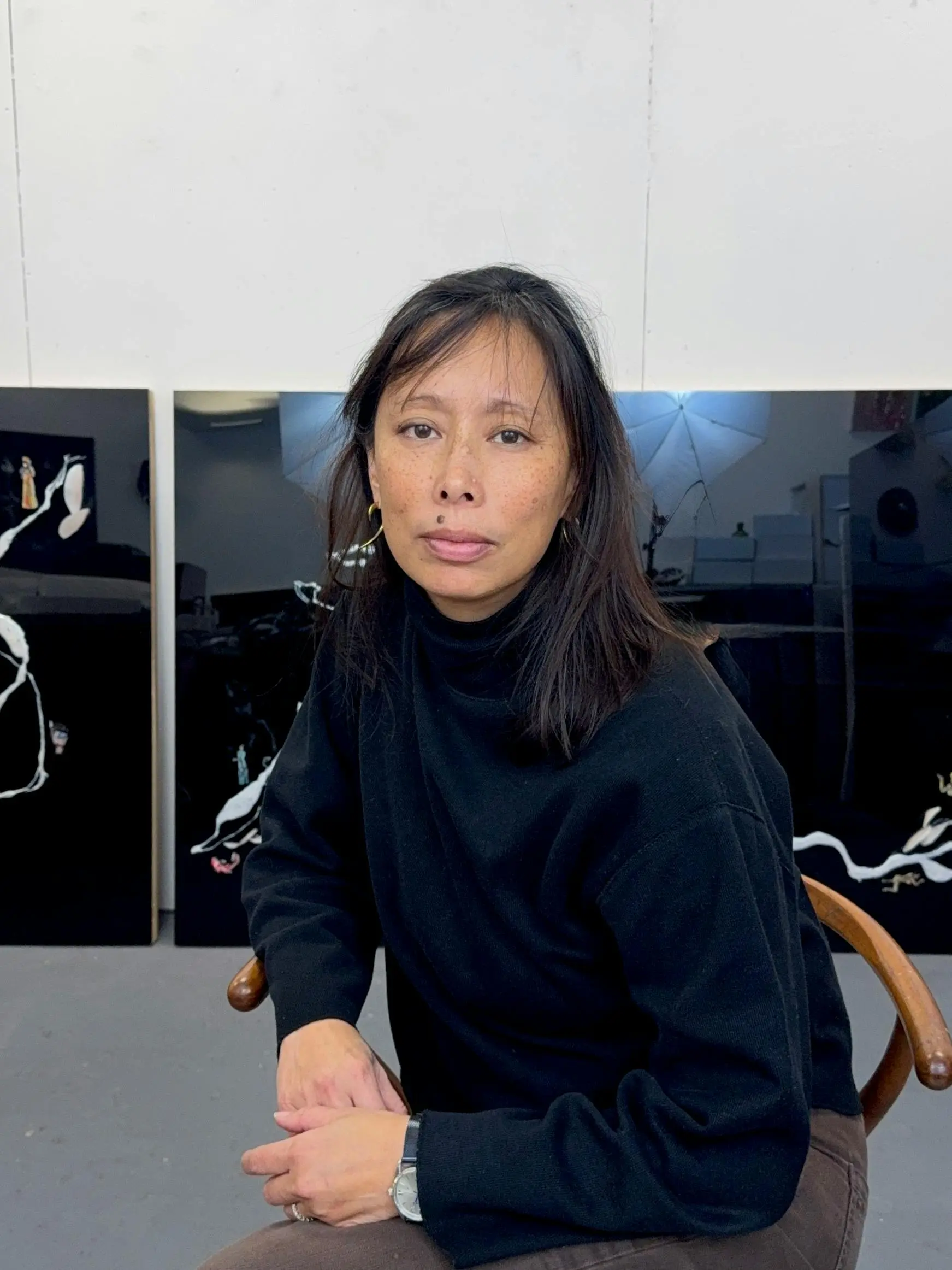
I was born in France into a Vietnamese family. My parents immigrated in the 1960s, so my work begins with a very intimate family memory, but it also engages with the collective memory of the Vietnamese diaspora. I explore these histories through video, installation, painting and sculpture.
I do not make clear distinctions between these different media. I think of sculpture in terms of the image it creates, and video as a living painting. I turn to video when I reach the limits of painting. Ultimately, the different media come together in the final image presented to the audience.
How does your curatorial practice connect with your work as an artist?
My curatorial practice is most visible through No Place Like Home, which I co-curate with KV Duong. Since 2022, we have brought together artists of Vietnamese heritage to explore ideas of home and the unhomely: how people who have migrated construct a place, a space and a sense of belonging. Through exhibitions, workshops, talks and gatherings, we aim to create a living space for discussion. For me, curating takes art towards discussion.
The artistic and curatorial practices also meet in the construction of an exhibition. I think about how the ensemble is curated: how the film, the objects, the works and the architecture compose an image and tell a story together. In that sense, there is an element of internal curation within my artistic practice.
How did nail gel become such a central material in your work?
I discovered nail gel during a residency at Palazzo Monti in Brescia in 2021. I had arrived without preparing materials, so I worked with what I found locally. I came across a shop selling products for nail salons and began experimenting with gel. Afterwards, I trained in salons in London and became close to the people working there. I also have an aunt in France who runs a nail salon, so the material connected with a world I already knew.
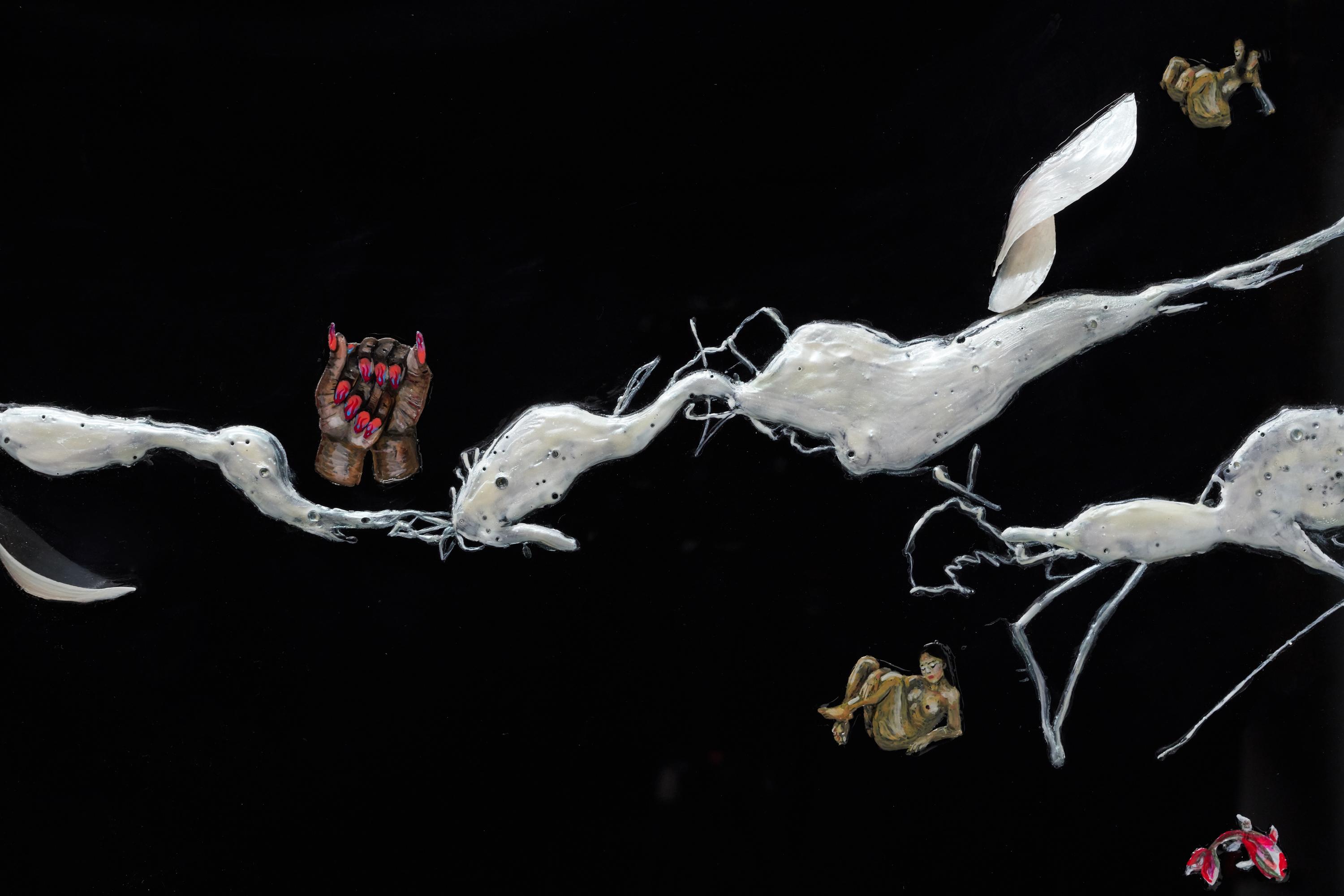
Nail gel belongs to a popular subculture. It is inexpensive and ordinary, but it carries stories of labour, migration and identity, particularly for Vietnamese women. Bringing it into a gallery can reverse established hierarchies and make visible people and forms of work that are often unseen.
It also has rich painterly and sculptural possibilities. I can build transparent layers, almost like glazing in oil painting, or allow the thick liquid to flow into small sculptural forms before curing it under a UV lamp. At the same time, the material is toxic and I am allergic to it. In my studio I can wear gloves, a mask and protective clothing, and I can pause production when necessary. Nail technicians often do not have that freedom. The work is therefore also a reminder that beauty can be toxic.
What projects are you developing at the moment?
This summer, No Place Like Home III forms part of Whitechapel Gallery's Backyard Biennial: East and is presented at SLQS Gallery. In August, I am also presenting my film Amazing Nails in a group exhibition at Yeo Workshop in Singapore, followed by the group exhibition Himoya at Tselinny Center of Contemporary Culture in Almaty.
Amazing Nails begins as a documentary and gradually becomes a musical. I filmed it in the Walthamstow nail salon where I trained, with Sophia, a young British-Vietnamese singer whose family has transmitted music across generations. The salon is a place where two communities meet: Vietnamese women working there and their mainly Afro-Caribbean clientele. It is a place of labour, but also of conversation, with a family atmosphere.
I would now like to develop another film in the Paris suburbs where I grew up. It would focus on Vietnamese women and the tensions between contemporary life and family obligations, for instance the question of caring for parents as they grow older. These responsibilities are deeply felt but not always spoken about.
Exploring your identity
How do you understand identity within your practice?
Identity is never fixed. As an artist, I was educated in Western art schools at Central Saint Martins and the Royal College of Art, and that forms an important part of my visual identity.
Vietnam is both an imagined homeland and a real place: a starting point for my inspiration and a destination through which I reconnect with my identity. The diasporic experience is shaped by a constant movement between memory, fiction and reality. Confronting these spaces can be difficult because we can never fully recover what has been lost, but it is also essential because it creates an awareness of a plural identity.
Why are everyday objects so important in your work?
Whenever I decide to make something, I begin with an object or an element from the everyday life of the diaspora: brooms from supermarkets, lotus seeds used in desserts, karaoke, nail salons or the bamboo blinds found in shops and nail salons. These ordinary objects and settings are my primary material.
My recent Ornament series was informed by Anne Anlin Cheng's book Ornamentalism, which examines how the Asian female body has been constructed through the Western gaze and objectified as ornament. I wanted to turn that gaze back. Instead of idealised landscapes, pagodas or women shown outside labour, the works contain scenes from diasporic life: women singing karaoke, restaurant aquariums and other familiar details. The smooth surfaces return a different image and propose a new subjectivity.
What first made you believe that art could become a space for taking a position?
Kader Attia's work was very important to me. Before becoming an artist, I had a corporate career. Seeing his exhibitions made me understand that an artist could express something and also take a position. Ten years ago, I resigned and began a BA at Central Saint Martins, followed by an MA at the Royal College of Art.
How you bring it to life
How does a space shape the way you present your work?
The context is essential: the gallery, its position within the art world and the place in which it is located are all very important. I do not think of an exhibition as a collection of separate pieces placed in a room. I prefer installations in which the whole space is approached as one work.
What role do images, texts and communication play once an artwork leaves the studio?
When viewers encounter the work, they should be free to follow their own questions. Once an artwork is finished, I cannot fully control how it will be understood; it escapes me. But the writing around it, the essays, the conversations, the communication and the images of the exhibition remain very important.
The exhibition view is itself an image and should be composed with the same attention as a painting. Whatever the medium, artists create images. An artwork then continues to live and circulate through its documentation. A work, or even a prototype, can survive through photographs and texts and through the works it later inspires. Communication is therefore part of the work and its continuing life.
Looking ahead
What is your next focus?
Film is my next major focus. I want to develop the project set in the Paris suburbs and continue exploring the experiences of Vietnamese women through film.
I am also interested in returning to painting, but not necessarily on canvas. I would like to paint on bamboo blinds, a popular object found in Vietnamese shops and nail salons.
What do you want to preserve as your practice evolves?
I want to keep a do-it-yourself quality and the spontaneity of a first work. It is important to learn skills, whether in filmmaking, lighting, painting or embroidery, but also to know how to forget them. Mastery can lead to repetition.
I embroidered a great deal when I was young because it was passed down within my family. When I later brought embroidery into my art, I deliberately kept it rough. I wanted it to feel like the gesture of someone discovering the technique for the first time, with more emotion and spontaneity. Craft depends on mastery and repetition; in an artwork, even when an artist repeats a process, each gesture should remain spontaneous.
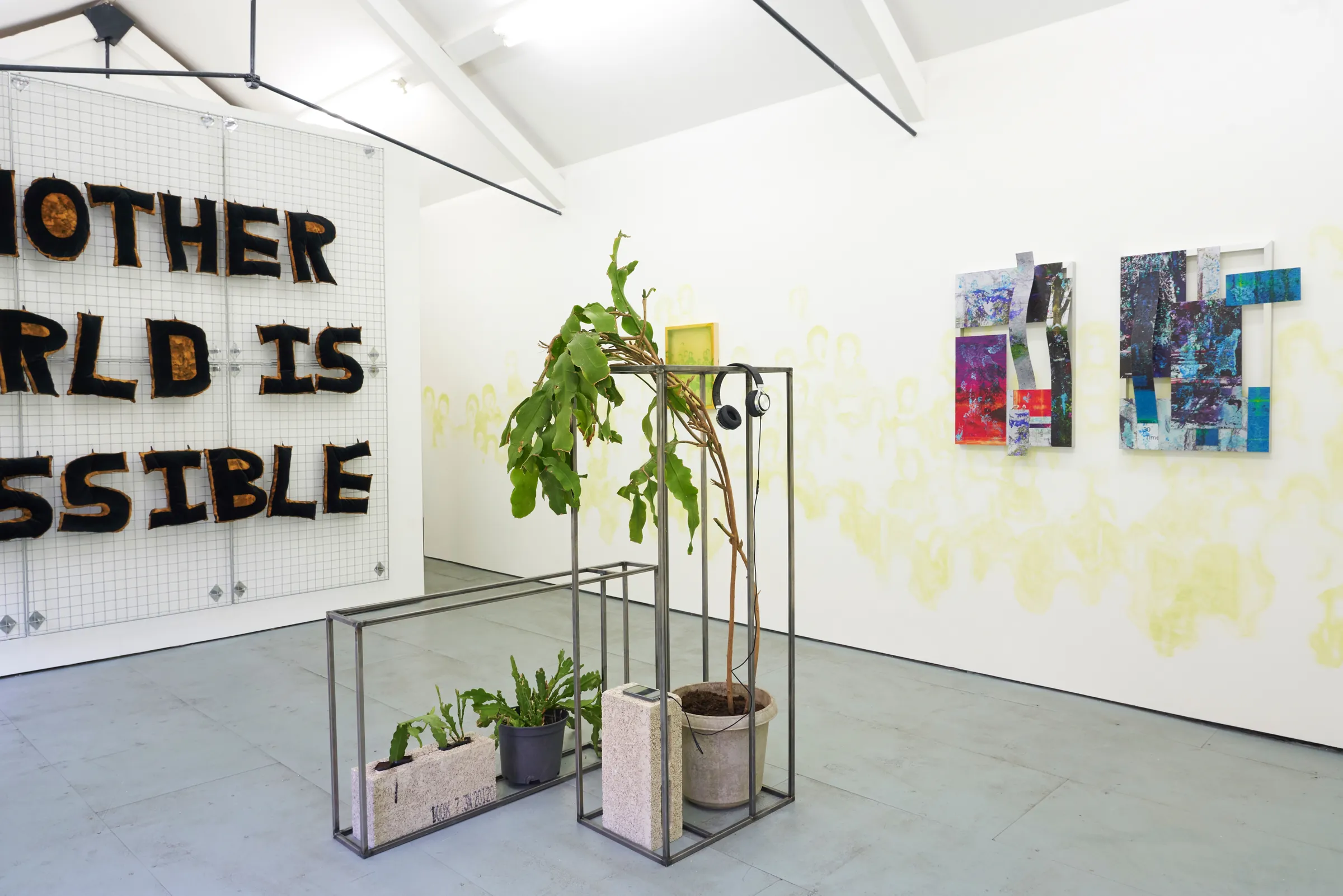
July - August 2026
Curated by Hoa Dung Clerget & KV Duong
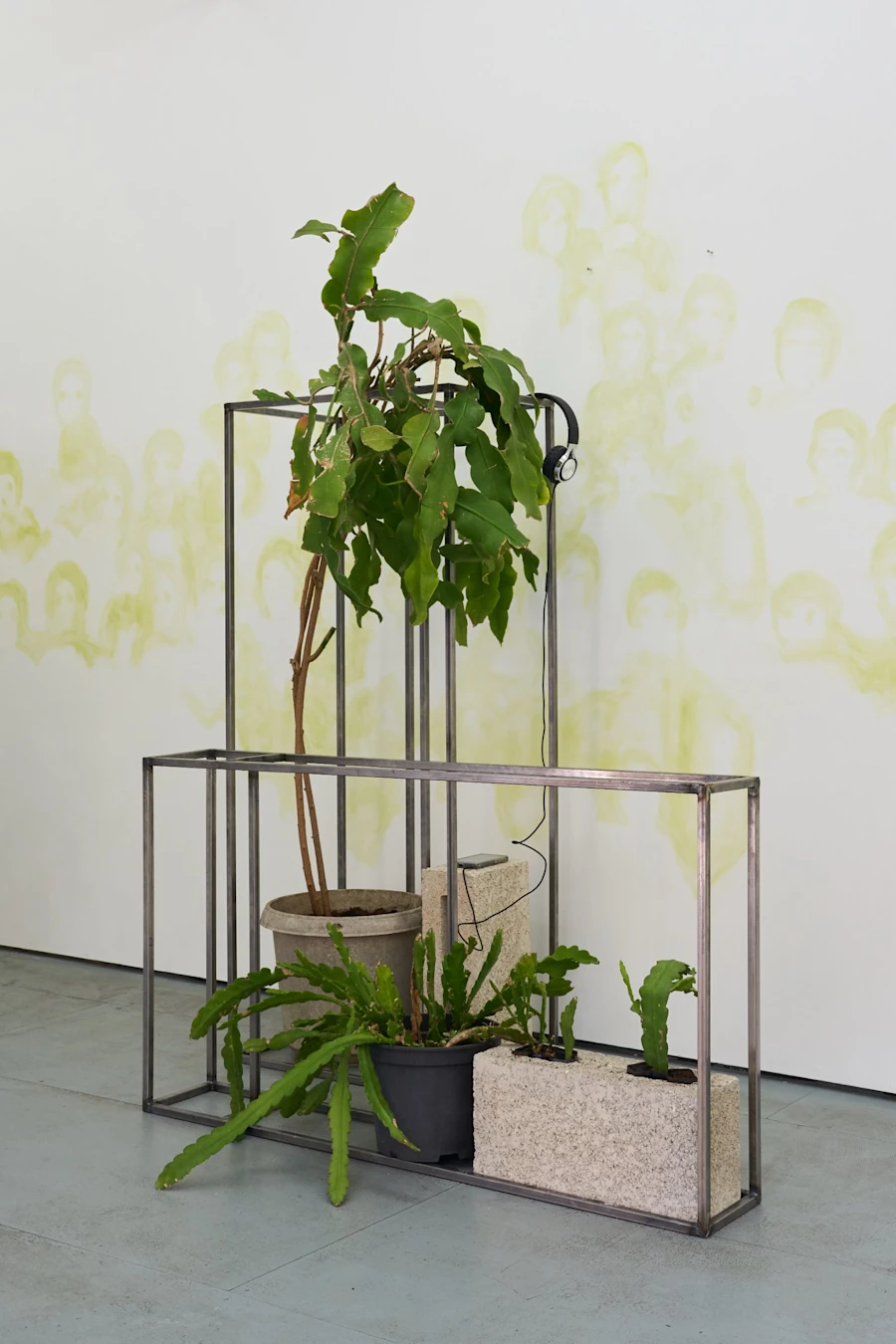
Gardens of kin
2026
bricks, MP3 media player, headphones
Various dimensions
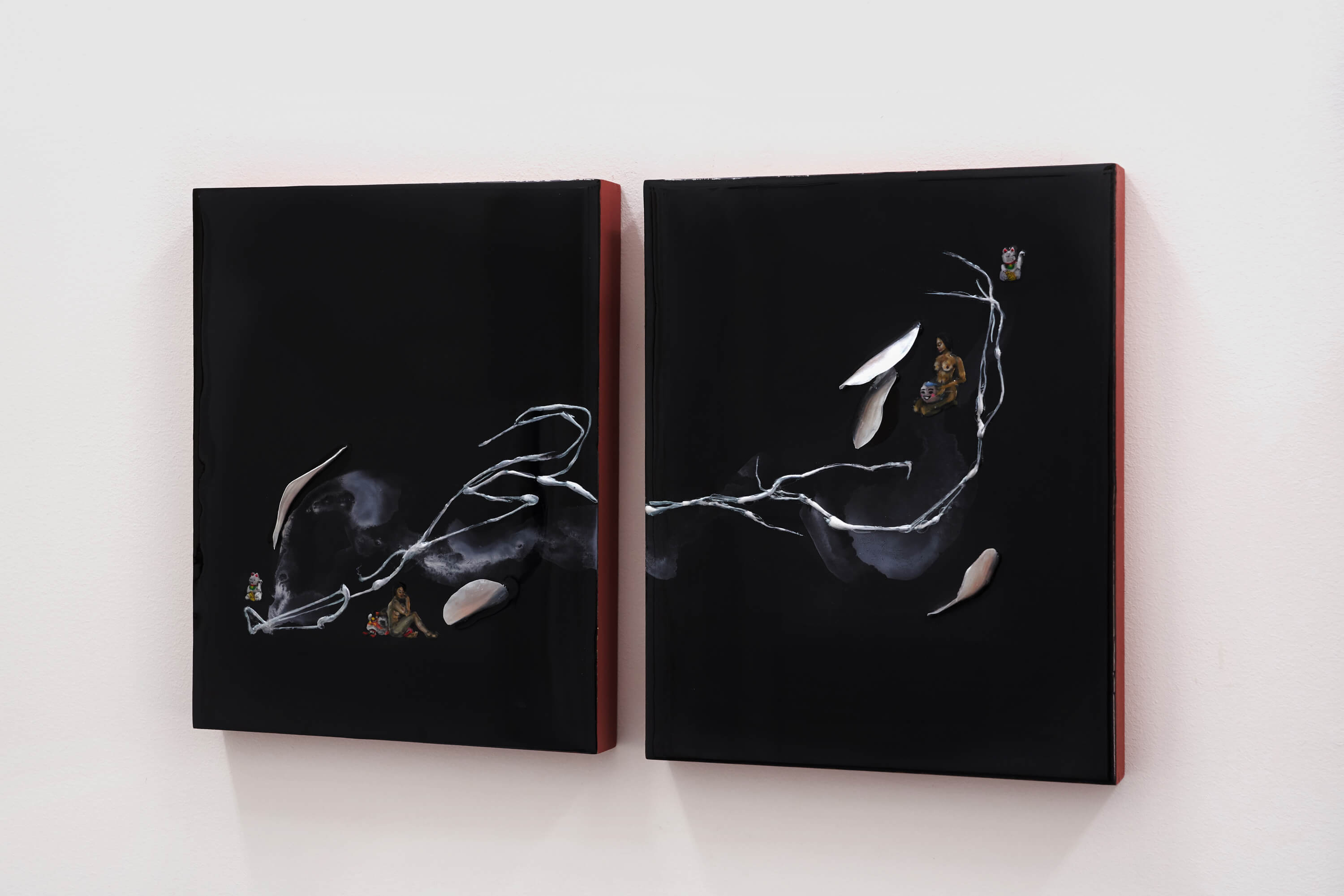
2026
UV gel builder, Nail powder
48 cm x 30 cm x 3.5 cm
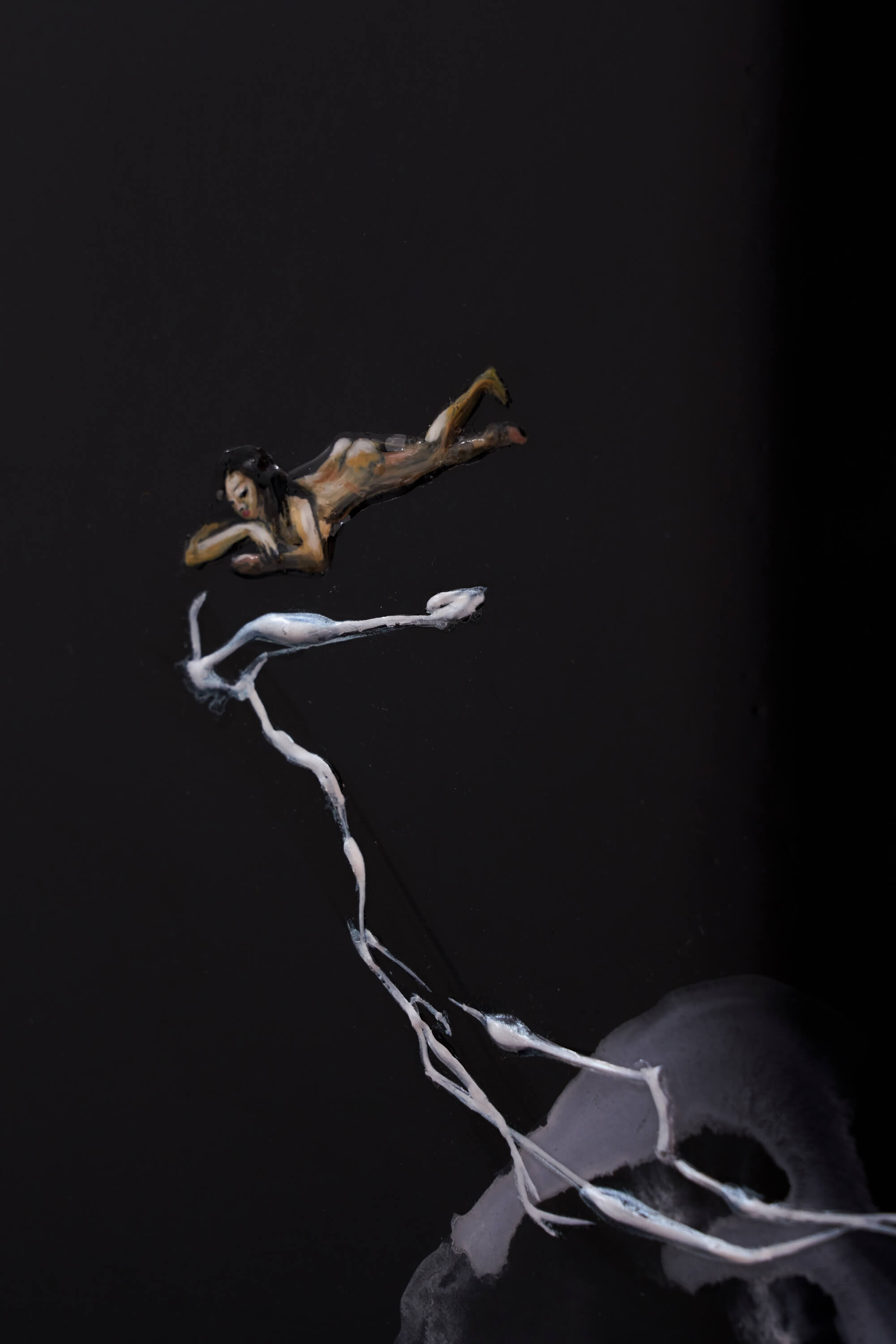
2026
UV gel builder, Nail powder
48 cm x 30 cm x 3.5 cm